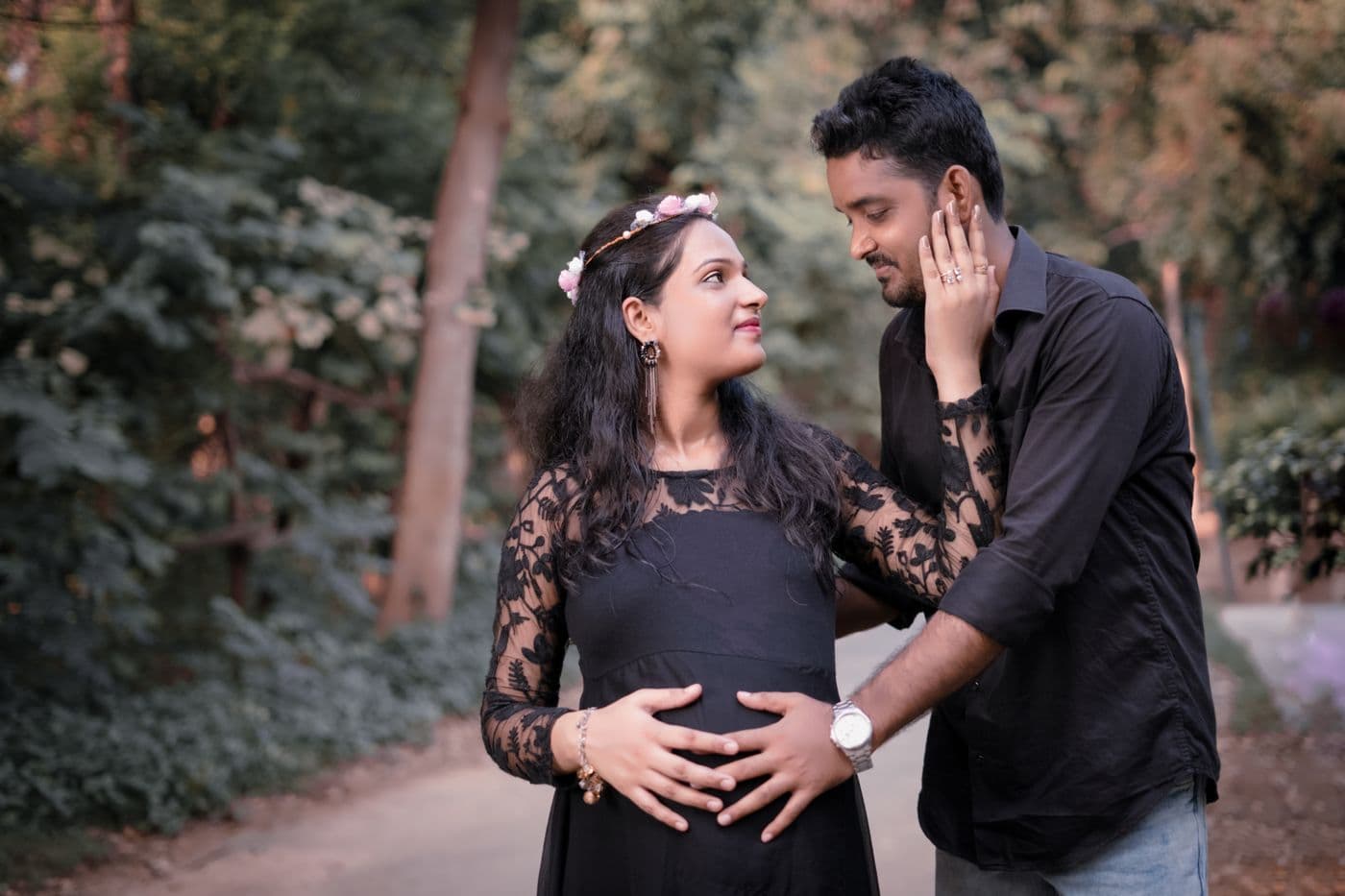
A very common story in our OPD: periods were never quite regular, but nobody worried. Then marriage, then a year or two of trying, then a mother-in-law's question — and suddenly "irregular periods" has become "PCOD problem".
Nothing new happened at the wedding. PCOD problem after marriage is usually the same condition that was there at nineteen, noticed for the first time because a baby is now on the agenda. That is worth knowing, because it means there is no one to blame and — more usefully — a well-understood path forward.
This explains the symptoms in plain language, with the Hindi terms alongside for anyone who has searched for PCOD problem symptoms in Hindi — the lakshan, in other words — and found only jargon. It covers why the condition surfaces after marriage, and what to do about it.
Our gynaecology department in Sonipat confirms PCOD with an ultrasound and blood tests in the same visit, and the doctor who reads the scan is the same one who talks you through it.
PCOD and PCOS: is there a difference?
You will see both terms. In everyday Indian usage they mean the same thing: polycystic ovary syndrome, a hormonal condition in which the ovaries hold many small immature follicles and ovulation is irregular.
Strictly, doctors use PCOS. PCOD — "polycystic ovarian disease" — is the older, more common term in India. If a report says one and a website says the other, they are describing the same condition. The NHS overview of PCOS is a reliable plain-English reference for the basics.
The symptoms, in plain language
Not every woman has all of these. Most have two or three. The pattern matters more than any single one.
Irregular periods (anivamit maasik dharm). The clearest sign. Cycles longer than thirty-five days, fewer than nine periods a year, or months with no period at all. Some women have the opposite — very heavy, prolonged bleeding after a long gap.
Difficulty conceiving (garbh dharan mein kathinai). Because ovulation is irregular, the fertile window is unpredictable or absent in a given month. This is the symptom that brings most married women to the clinic.
Weight gain, especially around the middle (vajan badhna, khaaskar pet ke aas-paas). Driven by insulin resistance, and frustratingly slow to shift.
Excess hair on the face, chest or abdomen (chehre ya sharir par anchahe baal). Caused by higher levels of male-type hormones. Often the symptom women find most distressing and least willing to mention.
Acne that persists into the twenties and thirties (muhaase), particularly along the jaw and chin.
Thinning hair on the scalp (sir ke baal patla hona), in a pattern more typical of men.
Dark, velvety patches of skin (garden ya bagal ki twacha ka kaala hona) on the neck, underarms or groin — a visible sign of insulin resistance.
Tiredness, low mood, and disturbed sleep. Less specific, but common, and often improved when the underlying condition is treated.
If two or three of these describe you, an assessment is worth having whether or not you are trying to conceive.
Why the PCOD problem surfaces after marriage
Three reasons, and none of them is that marriage caused it.
Attention. Irregular periods in an unmarried woman are often waved away — by families, and sometimes by doctors. After marriage, the same irregularity is suddenly examined closely.
Trying to conceive. Irregular ovulation may have gone unnoticed for years. It becomes very noticeable the moment a couple starts trying.
Weight and routine. Lifestyle often changes after marriage — different food, less activity, more stress, disturbed sleep. For a woman with underlying insulin resistance, that can be enough to tip mild PCOD into symptomatic PCOD.
Understanding this helps in one specific way. The condition is not new, so the years of "nothing was wrong" are not lost years — they simply were not examined. And the answer is not to worry about the past but to get a diagnosis now.
What happens at a PCOD assessment
It is simpler than most women expect, and usually done in one visit:
- A conversation — about your cycles, weight, skin, hair, and whether you are trying to conceive.
- A pelvic ultrasound, which shows the appearance of the ovaries.
- Blood tests — hormones, blood sugar, thyroid, sometimes prolactin and vitamin D, run in our NABL-accredited laboratory with most reports ready the same day.
A diagnosis needs two of three things: irregular ovulation, signs of high male-type hormones, and the typical ultrasound picture. Ultrasound alone is not enough — many women without PCOD have similar-looking ovaries — which is why the blood tests matter.
What treatment looks like
It depends on what you want most right now.
If conceiving is the priority, treatment aims at restoring ovulation: a modest weight change if weight is a factor, correcting thyroid or vitamin D if they are off, and if needed medicine to trigger ovulation. Our guide on getting pregnant with PCOS covers this in detail.
If periods and symptoms are the priority, the approach is diet and activity to lower insulin, sometimes metformin, and for hair and acne the combined pill or other medicine. Our 7-day PCOS diet plan is built for Indian kitchens, and the guide to realistic PCOS weight loss explains why the scales move slowly and what to do about it.
In both cases, diet and movement are the foundation. Medicine works far better on top of them than instead of them.
The NICHD's information on PCOS covers the longer-term picture — PCOD raises the risk of type 2 diabetes later in life, which is one more reason to know about it early.
Care at Saroj Hospital
Dr. Deepa Aggarwal, MBBS, DGO, DMRD, DNB (Radiology) sees patients in the gynaecology OPD every day, 10:00 AM–2:00 PM and 5:00–7:00 PM.
She is both a gynaecologist and a radiologist, which means the ultrasound that helps confirm PCOD is read by the same doctor managing it. Many women come with their husband or mother; that is welcome, and it often makes the conversation about fertility easier rather than harder.
Frequently asked questions
Can PCOD be cured?
No, but it can be managed very well. Diet, activity and, where needed, medicine bring most symptoms under control and restore fertility for most women. Many women find that once their weight and insulin are managed, the condition barely troubles them.
Will I be able to have children with PCOD?
Very likely, yes. PCOD makes conception less predictable, not impossible. Most women with PCOD who want children have them — with lifestyle change alone, or with straightforward ovulation treatment.
Is PCOD caused by marriage or by stress?
No. It is a hormonal condition that was almost always present before marriage. Stress and lifestyle changes can make symptoms more noticeable, but they do not cause the condition.
Should I see a doctor if my periods are only slightly irregular?
If cycles are consistently longer than thirty-five days, or you have other symptoms from the list above, yes — especially if you are planning a pregnancy. The assessment is simple, and knowing early is far better than finding out after a year of trying.
Book an appointment
If your periods are irregular, or you have been trying to conceive without success, a consultation replaces months of worry with a clear plan. Ultrasound and blood tests happen in one visit here.
Book an appointment with the gynaecology OPD, or call reception on +91 96676 67011.
Medically reviewed by Dr. Deepa Aggarwal, MBBS, DGO, DMRD, DNB (Radiology), Saroj Hospital, Sonipat.
This article is general health information, not medical advice. For guidance about your own health, please consult a doctor.
Consult Dr. Deepa Aggarwal
Book a real slot online — confirmation is instant.