

A woman once showed us a photo on her phone. It was a strip of tablets her cousin had been given for PCOS. "Can I just take these?" she asked. Her cousin wanted regular periods. She wanted to get pregnant. The tablets her cousin took would have stopped that from happening.
That story explains why this page exists. There is no single PCOS tablet. Each medicine does a different job, and the right one depends on what you want most right now. This PCOS tablets name list explains the common medicines, what each one is for, and what to expect. It does not give doses on purpose. Doses are decided by your doctor, after tests.
Our gynaecology department in Sonipat does the scan and blood tests for PCOS in the same visit as the consultation.
Start with the goal, not the tablet
PCOS affects women in different ways. Your PCOS medicine should match your main concern. For most women, that is one of four things.
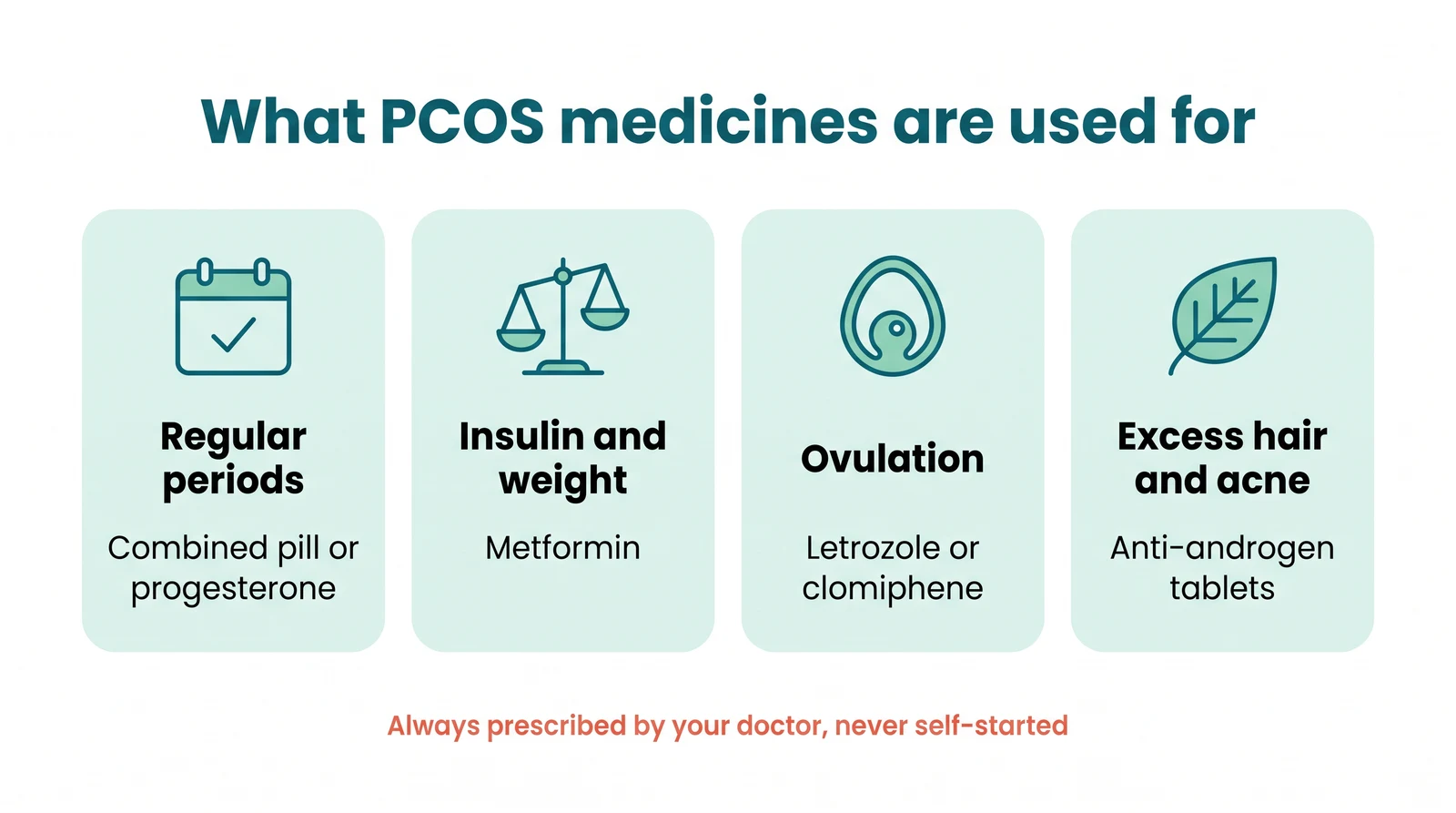
- Regular periods
- Weight and insulin
- Getting pregnant
- Excess hair and acne
Here is what is usually used for each.
For regular periods
Combined oral contraceptive pill. This is the most common first choice when pregnancy is not the goal right now. It brings regular, lighter periods and protects the lining of the womb. It also helps acne and excess hair over a few months. It is not suitable for everyone. Women who smoke, have migraines with aura, or have had a clot are usually advised against it.
Progesterone tablets. Taken for a few days every month or two, they bring on a period. This protects the womb lining when periods are very far apart. They do not prevent pregnancy.
Long gaps between periods are not just inconvenient. Without regular shedding, the lining of the womb can thicken too much over years. That is one reason treatment matters even if you are not trying to conceive.
For weight and insulin
Metformin. Many women with PCOS have insulin resistance, meaning the body needs more insulin to control sugar. This drives weight gain around the middle and can disturb ovulation. Metformin for PCOS improves how the body uses insulin. In some women it helps periods become more regular.
It is not a weight-loss tablet, and it works best alongside diet and activity. Common side effects are stomach upset and loose motions in the first few weeks. Taking it with food helps. Our 7-day PCOS diet plan and guide to PCOS weight loss cover the lifestyle side.
For getting pregnant
Letrozole. This is now often the first choice to help women with PCOS ovulate. It is taken for a few days early in the cycle. Your doctor may track the follicle on ultrasound to see whether an egg is released.
Clomiphene. An older medicine that also triggers ovulation. It is still widely used and works well for many women.
Both need monitoring. They can occasionally cause more than one egg to be released, which raises the chance of twins. Our guide to getting pregnant with PCOS explains the full plan.
Folic acid should be started before you try, whatever else you take.
For excess hair and acne
Anti-androgen tablets. These block the effect of male-type hormones, which cause unwanted hair and acne in PCOS. Spironolactone is a common example. They take several months to show results.
One important point. These medicines must not be taken if you could become pregnant, because they can affect a baby boy's development. They are usually given together with reliable contraception.
Creams and simple hair-removal methods can help alongside, and are often the quickest relief.
What about supplements?
Inositol supplements are popular for PCOS. Some women find them helpful, and they are generally safe, but the evidence is still mixed. Vitamin D should be checked too, as many women in India are low. Ask your doctor before buying expensive combination products online.
The NHS guide to PCOS treatment and the NICHD's overview of PCOS treatments describe the same medicines and goals.
The PCOS tablets name list in one place
For quick reference, these are the medicines covered above, by generic name. Brand names differ from chemist to chemist, so always check the generic name on the strip.
- Combined oral contraceptive pill, for regular periods, acne and hair
- Progesterone tablets, to bring on a period
- Metformin, for insulin resistance
- Letrozole, to help ovulation
- Clomiphene, to help ovulation
- Spironolactone, an anti-androgen for hair and acne
- Folic acid, before and during early pregnancy
Seeing a name here does not mean it is right for you. It means you will recognise it when your doctor explains why it was chosen.
Why you should never borrow a PCOS prescription
The same diagnosis does not mean the same treatment. The pill that suits a 20-year-old student would stop a newly married woman from conceiving. An anti-androgen safe for one woman could harm an unplanned pregnancy in another. Metformin may be wrong if your kidneys are not working well.
Before any medicine, your doctor will usually check your periods, do a pelvic scan, and test hormones, sugar and thyroid. Then the treatment fits you.
Seeing Dr. Deepa Aggarwal
Dr. Deepa Aggarwal, MBBS, DGO, DMRD, DNB (Radiology) sees patients in the gynaecology OPD every day, 10:00 AM–2:00 PM and 5:00–7:00 PM.
Bring a list of everything you have taken for PCOS so far, including supplements, and how long you took each. If you are planning a pregnancy soon, say so at the start. It changes the whole plan.
Questions about PCOS medicines
Can PCOS be cured with tablets?
No. Tablets control the symptoms of PCOS, but they do not remove the condition. Lifestyle changes, especially weight and activity, remain the foundation, and medicines work best on top of them.
How long do I need to take PCOS medicine?
It depends on the goal. Some women take the pill for years; others take ovulation tablets for a few cycles only. Your doctor will review the plan as your needs change, for example when you decide to try for a baby.
Does metformin help with weight loss in PCOS?
It can help a little, mainly by improving how the body handles insulin. It is not a weight-loss drug on its own. Diet and activity do most of the work.
Is it safe to get pregnant after stopping the pill?
Yes. Fertility usually returns soon after stopping. With PCOS, ovulation may still be irregular, so see your doctor if periods do not settle within a few months.
Book an appointment
If you have PCOS and are unsure which medicine is right for you, book a consultation. One visit with a scan and blood tests gives you a plan built around your own goal.
Book an appointment with the gynaecology OPD, or call reception on +91 96676 67011.
Medically reviewed by Dr. Deepa Aggarwal, MBBS, DGO, DMRD, DNB (Radiology), Saroj Hospital, Sonipat.
This article is general health information, not medical advice. For guidance about your own health, please consult a doctor.
Consult Dr. Deepa Aggarwal
Book a real slot online — confirmation is instant.