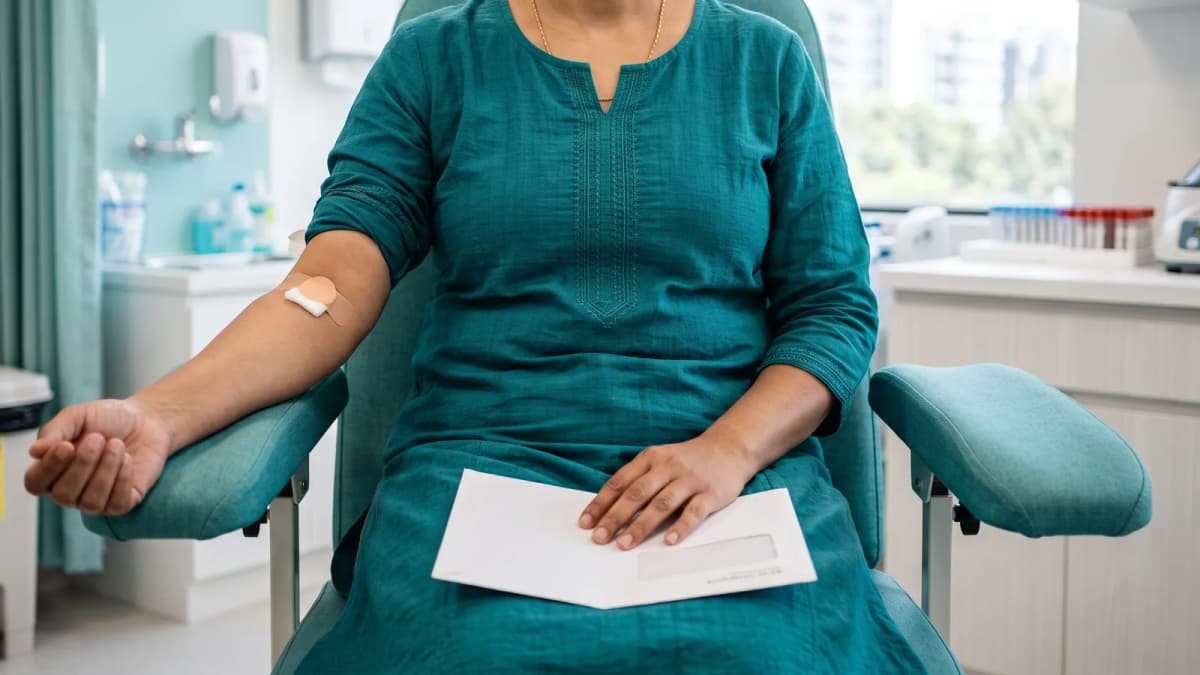
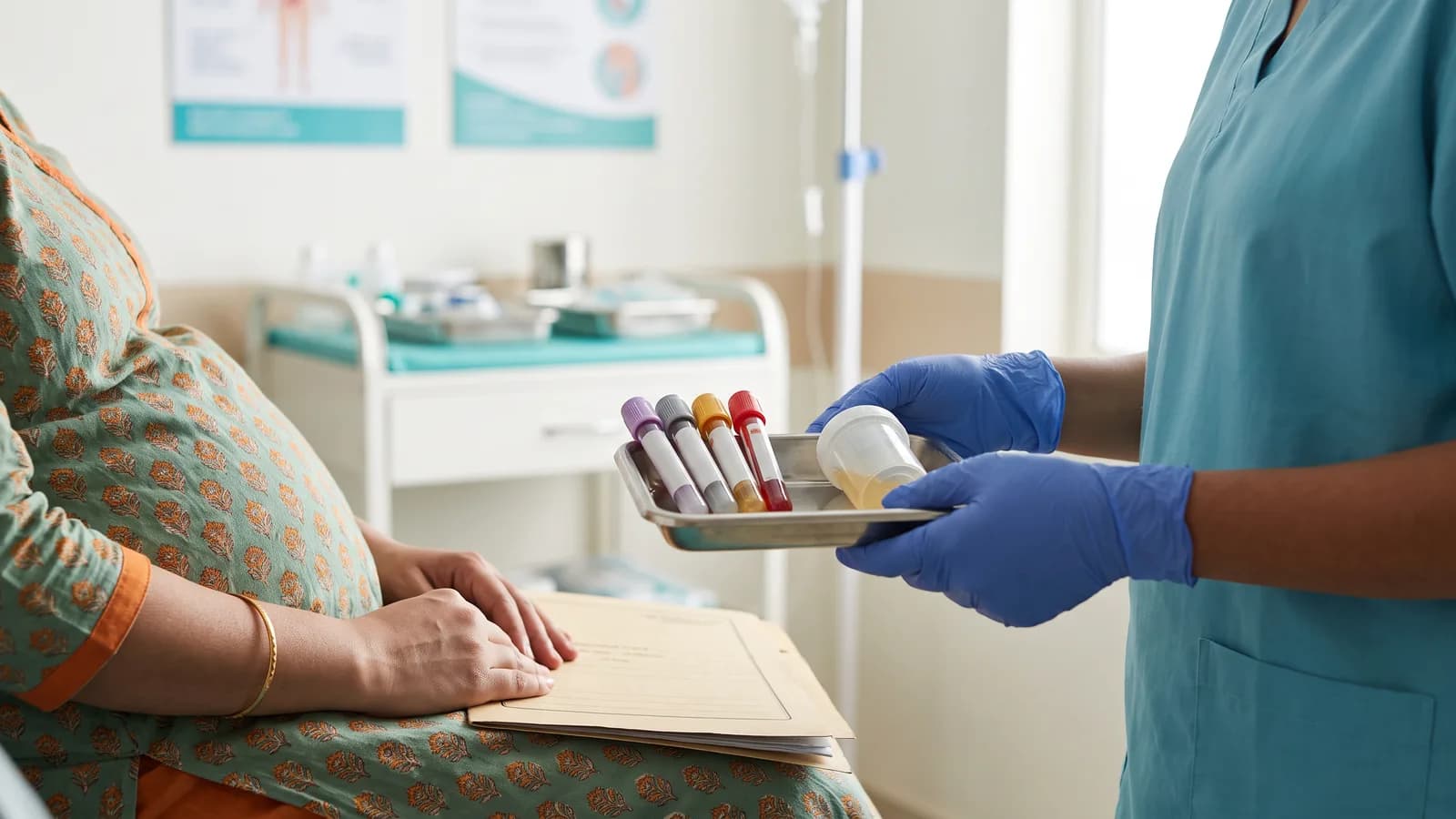
At the first pregnancy visit, most women leave with a long slip of tests and very little idea what any of them are for. Blood group. CBC. TSH. HBsAg. VDRL. It can look like the doctor is testing for everything, and some women quietly wonder whether something is wrong.
Nothing is wrong. This set of tests is routine, and almost every pregnant woman has it. Doctors call it the antenatal profile. This guide goes through the pregnancy profile test list one test at a time, in simple words: what each one checks, why it matters for you and the baby, and when it is done.
Our gynaecology department in Sonipat runs these tests in its own NABL-accredited laboratory, in the same building as the scan and the consultation.
The pregnancy profile test list at a glance
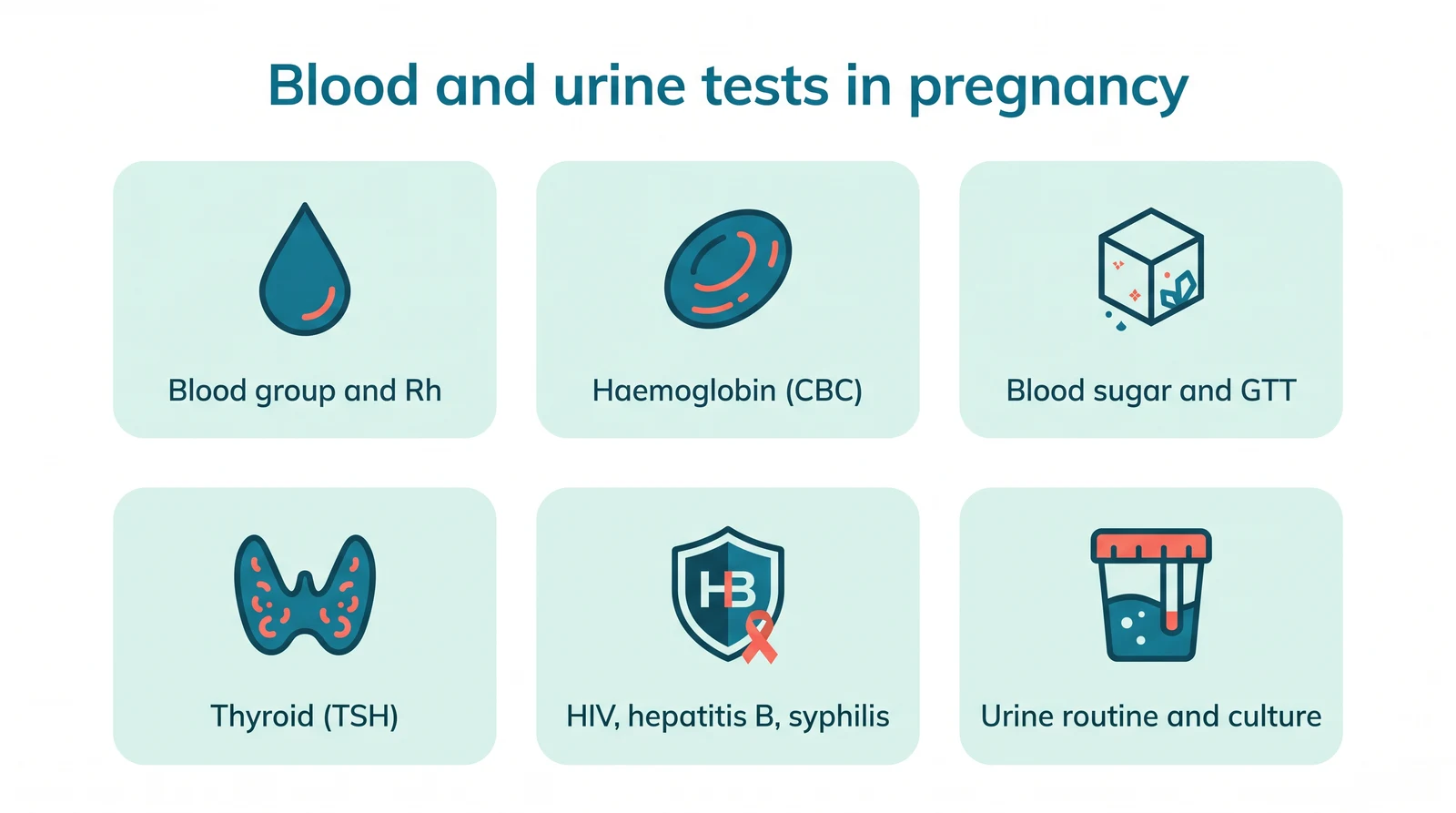
| Test | What it checks | Usually done | Current price |
|---|---|---|---|
| Blood group and Rh | Your blood type | First visit | ₹50 |
| CBC (complete blood count) | Haemoglobin and anaemia | First visit, repeated later | ₹300 |
| Blood sugar, fasting | Sugar levels | First visit | ₹50 |
| Glucose tolerance test (GTT) | Diabetes in pregnancy | First visit and 24 to 28 weeks | ₹200 |
| TSH | Thyroid | First visit | ₹200 |
| HIV 1 and 2 | HIV infection | First visit | ₹350 |
| HBsAg | Hepatitis B | First visit | ₹200 |
| VDRL | Syphilis | First visit | ₹200 |
| Urine routine | Infection, sugar, protein | Every few visits | ₹150 |
| Urine culture | Hidden urine infection | First visit | ₹800 |
These are the prices as listed on our tests page. Your doctor may not need every test, and may add others for your own history.
Blood group and Rh
This tells us your blood type, and whether you are Rh positive or Rh negative.
It matters because of the Rh part. If you are Rh negative and your baby is Rh positive, your body can make antibodies against the baby's blood. That rarely harms a first baby, but it can affect later ones. An injection given at the right time prevents it. So if you are Rh negative, your doctor will plan for this early.
CBC and haemoglobin
The complete blood count checks your haemoglobin, the part of the blood that carries oxygen. Anaemia is very common in pregnancy in India. It makes you tired and breathless, and severe anaemia raises risks at delivery.
Because the baby takes iron from you, haemoglobin is usually checked again later in pregnancy. Iron tablets, taken properly, make a real difference.
Some women are also advised a test for thalassaemia trait, a common inherited blood condition. Ask about it if it runs in your family.
Sugar tests
Pregnancy changes how your body handles sugar. Some women develop diabetes for the first time during pregnancy. It usually causes no symptoms, but it can make the baby grow too large and cause problems at birth.
In India, many doctors check sugar at the first visit and again between 24 and 28 weeks with a glucose tolerance test. You drink a measured glucose drink, and a blood sample is taken two hours later. Women with PCOS, a family history of diabetes, or a large baby before need this test without fail.
Thyroid
The TSH test checks your thyroid gland. The baby depends on your thyroid hormone, especially in the first three months, for brain development. An underactive thyroid is common and easy to treat with a daily tablet once it is found.
Infection tests: HIV, hepatitis B and syphilis
These three tests are done for every pregnant woman. Please do not feel judged. They are routine because each infection can pass to the baby, and each can now be largely prevented with treatment during pregnancy or at birth.
Most women test negative. If a test is positive, treatment starts early, and the baby can be protected.
Urine tests
A urine routine test looks for infection, sugar and protein. Protein in the urine later in pregnancy can be an early sign of high blood pressure in pregnancy, so it is checked at several visits.
A urine culture at the first visit looks for hidden infection, which is common in pregnancy and needs treating even without symptoms. Our guide to being pregnant with a urine infection explains why.
Other tests your doctor may suggest
Not every woman needs these, but you may be advised:
- The double marker test with the NT scan at 11 to 14 weeks. Our guide to the double marker test in pregnancy explains it.
- Rubella immunity, if your vaccination history is unclear.
- Hepatitis C, if there is a particular risk.
- A TORCH profile, only when there is a specific reason. It is not needed routinely.
The WHO recommendations on antenatal care and the ACOG guide to routine tests during pregnancy list the same core set of blood tests in pregnancy.
Before you go for your tests
- Fast for 8 to 12 hours if a fasting sugar test is on your slip. Water is fine.
- Come in the morning. Sample collection runs Monday to Saturday, 8:00 AM to 12:00 PM.
- Bring your antenatal card, so results can be written in.
- Bring any earlier reports, such as a known blood group or thyroid test.
Seeing Dr. Deepa Aggarwal
Dr. Deepa Aggarwal, MBBS, DGO, DMRD, DNB (Radiology) sees patients in the gynaecology OPD every day, 10:00 AM–2:00 PM and 5:00–7:00 PM.
Most reports in the antenatal profile are ready the same day, so the doctor can go through them with you on the same visit as your scan. If this is your first pregnancy, our guide to your first pregnancy checkup explains the rest of that first visit.
What mothers-to-be ask about these tests
Are all these tests really necessary?
The core antenatal profile is recommended for every pregnant woman, because each test finds a common, treatable problem early. Extra tests are added only when there is a reason. Ask your doctor why any test is on your slip.
Do I need to fast for the antenatal profile?
Only for the fasting sugar test and the glucose tolerance test. The other tests do not need fasting. Your slip will say which apply.
Will the infection tests be kept private?
Yes. Results are shared only with you and your doctor. These tests are routine for every pregnant woman.
When will I get the reports?
Most routine reports are ready the same day. The urine culture takes 48 to 72 hours, because the germs need time to grow.
Book an appointment
If you have just found out you are pregnant, book your first visit and the antenatal profile together. The tests, the scan and the doctor are all in one place.
Book an appointment with the gynaecology OPD, or call reception on +91 96676 67011.
Medically reviewed by Dr. Deepa Aggarwal, MBBS, DGO, DMRD, DNB (Radiology), Saroj Hospital, Sonipat.
This article is general health information, not medical advice. For guidance about your own health, please consult a doctor.
Consult Dr. Deepa Aggarwal
Book a real slot online — confirmation is instant.