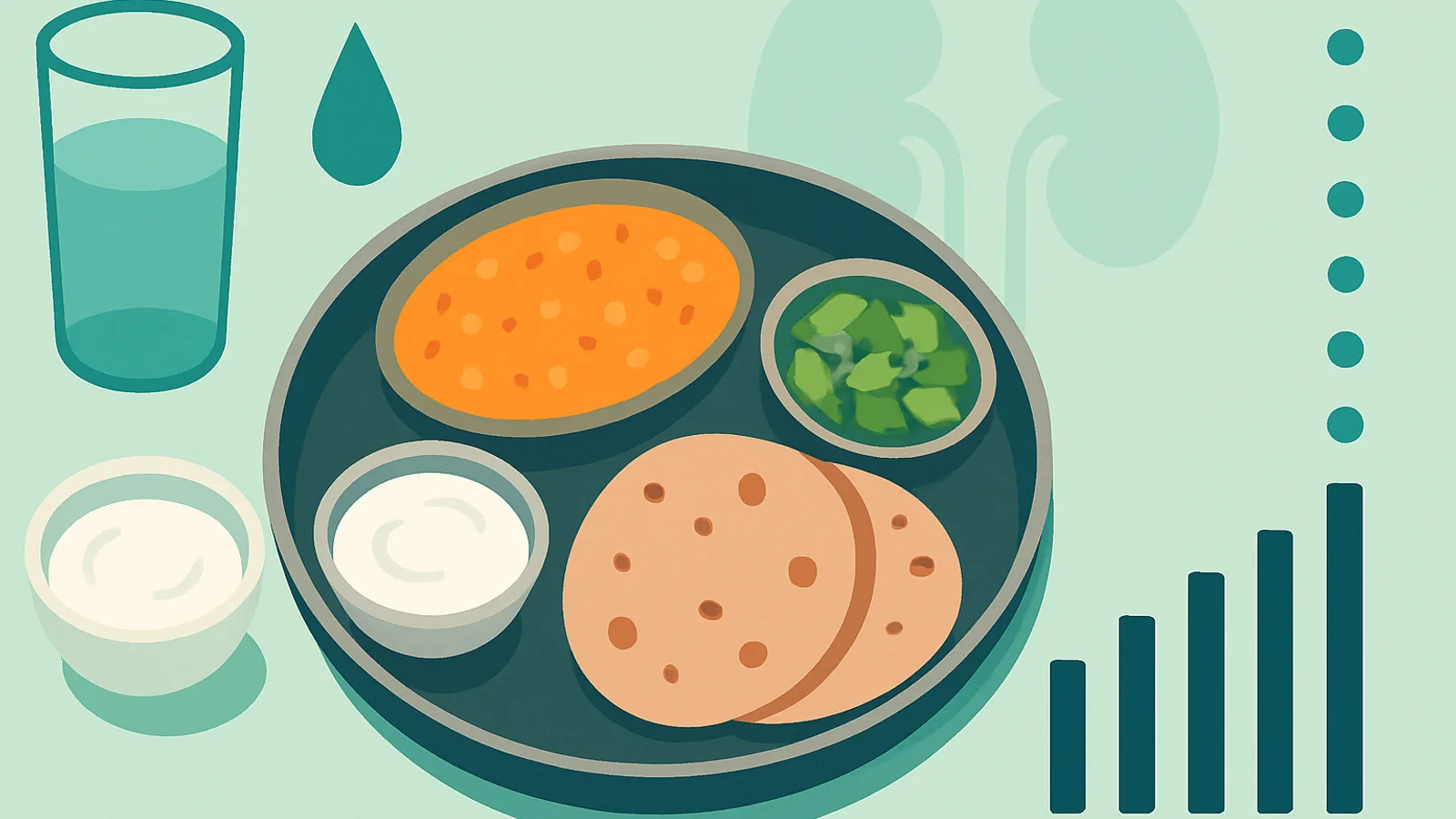
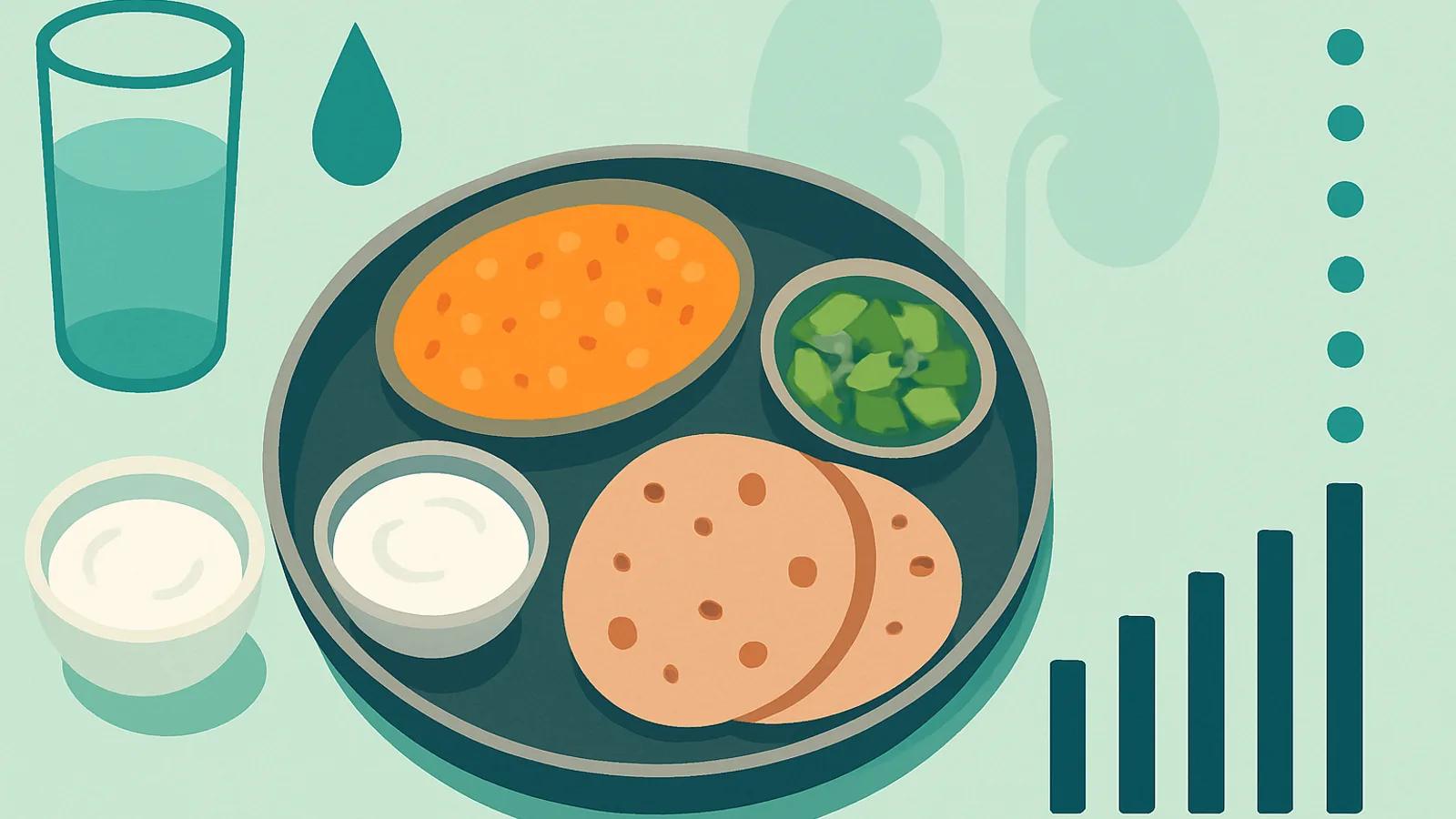
If you have passed a kidney stone, you already know you do not want a second one. The good news is that what you eat and drink genuinely changes your odds — and it does not mean giving up Indian food. This 7 day kidney stone diet chart is built around ordinary dal, roti and sabzi, not imported health foods.
Before the chart, one thing matters more than any single ingredient: water. Most stones in North India form because urine stays too concentrated through a long, hot day. Everything below assumes you are drinking steadily from morning to night.
If you are still working out whether your pain is a stone at all, start with the early signs of a kidney stone, then come back here. For evaluation and treatment, our urology department in Sonipat has ultrasound and the lab in the same building.
Why diet matters for kidney stones
A stone forms when minerals in urine get concentrated enough to crystallise. Calcium oxalate stones are the most common kind. Three things drive them: how much you drink, how much salt you eat, and how much oxalate is in your food.
Diet will not dissolve a stone you already have. What it does is cut the odds of the next one. If you have had one stone, those odds are not small. So this is prevention, not treatment.
Two habits do most of the work:
- Volume. Enough fluid to keep urine pale through the day.
- Salt. Excess sodium pushes more calcium into urine, which is exactly where you do not want it. The World Health Organization's guidance on salt reduction is a useful benchmark for how much most of us actually eat.
What foods cause kidney stones
Patients often expect a long banned list. It is shorter than you think, and it depends on your stone type — which is why a stone analysis matters.
The usual culprits, in the order they matter for most North Indian diets:
Salt, in all its hidden forms. Less the salt you add while cooking, more the pickles, papad, namkeen, packet snacks and restaurant food. For most patients this is the biggest lever.
High-oxalate foods, in quantity. Spinach is the well-known one. Also beetroot, sweet potato, nuts, sesame, chocolate and strong tea. Note the phrase in quantity. Palak once a week is not your problem. Palak paneer four times a week, plus a litre of tea a day, is.
Too much animal protein. Large daily portions of mutton, chicken or eggs raise uric acid and reduce a natural stone inhibitor in urine.
Sugary drinks. Colas in particular are associated with higher stone risk.
Too little calcium. This one surprises people. Cutting out dairy tends to increase oxalate stone risk. Calcium from food binds oxalate in the gut, before either reaches your kidneys. So eat calcium with meals rather than avoiding it. The NIDDK's guidance on eating, diet and nutrition for kidney stones explains this trade-off well.
Vegetables to avoid for kidney stones
Strictly speaking, very few vegetables need avoiding outright. For calcium oxalate stones — again, the most common type — these are the ones to eat less often, or to pair with a source of calcium such as curd:
- Spinach (palak) — the highest-oxalate vegetable in most Indian kitchens
- Beetroot and beet greens
- Sweet potato
- Okra (bhindi), in large quantities
- Colocasia (arbi)
Everything else — lauki, tinda, gourds, carrots, cauliflower, cabbage, most beans — is fine and worth eating.
If your stone was uric acid rather than calcium oxalate, this list changes and red meat matters more than spinach. That is a conversation to have after a stone analysis, not something to guess at.
The 7-day kidney stone diet chart
Treat this as a template, not a prescription. Portions assume an average adult with normal kidney function. If you have been told your kidney function is reduced, or you have diabetes or high blood pressure, the plan needs adjusting for you personally.
Every day starts the same way: a large glass of water on waking, and a target of pale urine by mid-morning.
Day 1 — Monday
- Morning: Water. Vegetable poha or upma. Avoid the pickle.
- Mid-morning: Coconut water or plain water. Fruit — apple or pear.
- Lunch: Two rotis, moong dal, lauki sabzi, a bowl of curd.
- Evening: Water. Roasted chana, lightly salted.
- Dinner: Rice, rajma cooked with less salt, cucumber salad. Buttermilk.
Day 2 — Tuesday
- Morning: Water. Two idlis with sambar, light on salt.
- Mid-morning: Water. A banana.
- Lunch: Roti, masoor dal, cabbage sabzi, curd.
- Evening: Barley water or plain water.
- Dinner: Khichdi with vegetables, buttermilk.
Day 3 — Wednesday
- Morning: Water. Vegetable daliya.
- Mid-morning: Citrus fruit — orange or sweet lime. Citrate is a natural stone inhibitor.
- Lunch: Rice, arhar dal, tinda sabzi, curd.
- Evening: Water. Puffed rice, unsalted.
- Dinner: Roti, mixed vegetable, salad.
Day 4 — Thursday
- Morning: Water. Besan chilla with mint chutney, not pickle.
- Mid-morning: Water. Papaya.
- Lunch: Roti, chana dal, gourd sabzi, curd.
- Evening: Lemon water. Lemon is one of the more useful things in this plan.
- Dinner: Rice, kadhi made with fresh curd, salad.
Day 5 — Friday
- Morning: Water. Paratha without excess ghee, curd on the side.
- Mid-morning: Water. Guava or apple.
- Lunch: Roti, moong dal, carrot and beans sabzi, curd.
- Evening: Coconut water.
- Dinner: Vegetable pulao with raita.
Day 6 — Saturday
- Morning: Water. Vegetable sandwich on brown bread.
- Mid-morning: Water. Melon, in season.
- Lunch: Rice, sambar, cauliflower sabzi, curd.
- Evening: Lemon water. A small handful of roasted makhana.
- Dinner: Roti, paneer bhurji with less salt, salad.
Day 7 — Sunday
If you eat non-vegetarian food, this is the day for it — one moderate portion, not a feast.
- Morning: Water. Poha or two eggs.
- Mid-morning: Water. Fruit.
- Lunch: Rice, one moderate portion of chicken curry, salad, curd. Skip the second helping.
- Evening: Water. Fruit chaat, no chaat masala.
- Dinner: Light — daliya or khichdi, buttermilk.
How much water is actually enough
It depends on your body, your work and the weather. Someone driving a tempo through a Sonipat June loses far more than someone in an air-conditioned office.
Rather than fixing a number, use two checks:
- Colour. Pale straw, not deep yellow. Check mid-afternoon, not first thing in the morning.
- Frequency. If you are going many hours without passing urine, you are behind.
Practical habits that work better than good intentions: keep a filled bottle within arm's reach at work, drink a glass before each meal, and drink again before bed if you have had stones before — the overnight gap is when urine concentrates most.
Lemon water helps because citrate binds calcium in urine and slows crystal formation. Plain nimbu pani, without sugar, is genuinely useful here.
When to see a doctor
Diet is prevention. It is not a substitute for evaluation, and there are situations where waiting is the wrong call.
Seek care the same day if you have:
- Severe pain that comes in waves and will not settle
- Fever with back or flank pain — this combination can mean an infected, blocked kidney and needs urgent attention
- Vomiting that stops you keeping fluids down
- Visible blood in urine
- Passing very little urine, or none
Book a consultation soon if you have:
- Had a stone before and feel the pain returning
- Dull, persistent flank ache with burning urine
- Been told on a scan that you have a stone, even without symptoms
A stone that silently blocks urine flow can damage a kidney while causing little pain. That is the reason not to simply wait it out.
Evaluation and treatment at Saroj Hospital
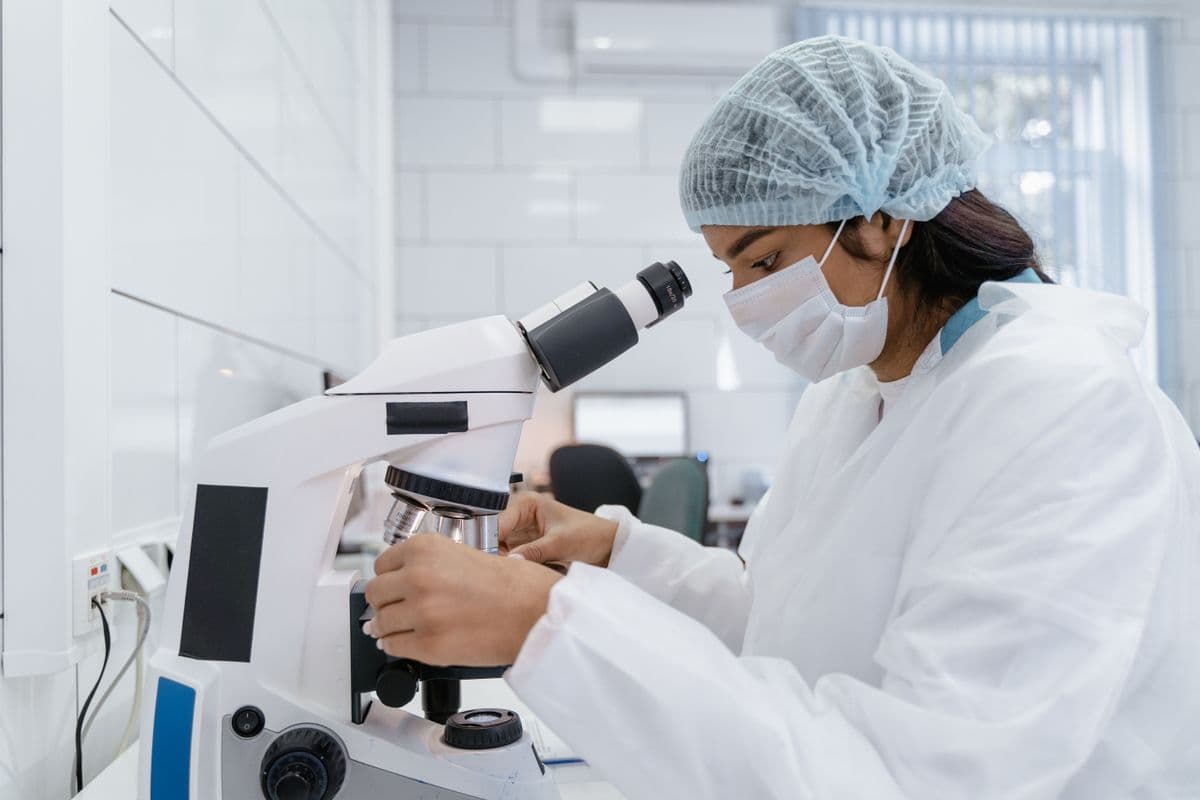
Assessment usually starts with an ultrasound and a urine test. Both are done in the same building, so most patients leave with an answer instead of a second appointment. Our pathology laboratory is NABL-accredited, so its processes are independently audited.
Dr. Jatin Jain, MBBS, DNB (General Surgery), MCh (Urology) sees patients in the urology OPD every day, 9:00–11:30 AM and 4:00–6:30 PM. If a stone needs more than fluids and medicine, he will talk you through the options — and what recovery actually looks like — before anything is decided.
Bring any previous scans or reports with you. If you have passed a stone before and kept it, bring that too — stone analysis changes the diet advice considerably.
Frequently asked questions
Can a 7-day diet dissolve my kidney stone?
No, and be cautious of anything that promises otherwise. Diet lowers the risk of new stones. It can also help a small stone pass more comfortably, by keeping urine dilute. Dissolving a stone you already have is only realistic for some uric acid stones, on prescribed medicine, under supervision.
Should I stop eating calcium and dairy?
No. Cutting calcium out usually makes oxalate stones more likely, not less, because dietary calcium binds oxalate in the gut before it reaches the kidney. Have curd or milk with meals. What you should limit is calcium supplements taken between meals, unless a doctor has advised them.
Is tea bad for kidney stones?
Strong tea is high in oxalate, and many households here drink several cups a day. You do not need to stop, but two cups is a more sensible ceiling than six — and neither tea nor coffee counts towards your water for the day.
How long should I follow this diet?
Think of it as a permanent shift rather than a seven-day course. The recurrence risk after a first stone is significant and lasts for years. The chart above is a week-long template you repeat, adjusting for season and what your stone analysis showed.
Book an appointment
If you have had a stone, or you are getting flank pain that keeps returning, get it looked at rather than managing it with painkillers. Consultation, ultrasound and lab tests happen in one visit here, and most reports are ready the same day.
Book an appointment with the urology OPD, or call reception on +91 96676 67011.
For a wider view of prevention and treatment, the NIDDK's kidney stones resource is a reliable, plain-language reference.
Medically reviewed by Dr. Jatin Jain, MBBS, DNB (General Surgery), MCh (Urology), Saroj Hospital, Sonipat.
This article is general health information, not medical advice. For guidance about your own health, please consult a doctor.
Consult Dr. Jatin Jain
Book a real slot online — confirmation is instant.