It burns when you pass urine. You feel you need to go again five minutes later, and very little comes out. By the evening you are searching for a tablet that will make it stop.
That is a urine infection, or UTI, in most cases. The good news is that the right UTI medicine usually settles it within a few days. The catch is the word right. The tablet that worked for your neighbour, or the one left over from last time, may not touch the germ you have now.
This guide explains what doctors actually prescribe for a urine infection, why a simple urine test should come before the tablets, and when a UTI needs a specialist rather than a pharmacy. Our urology department in Sonipat sees urine infections every day, and the laboratory that tests the sample is in the same building.
What a urine infection is
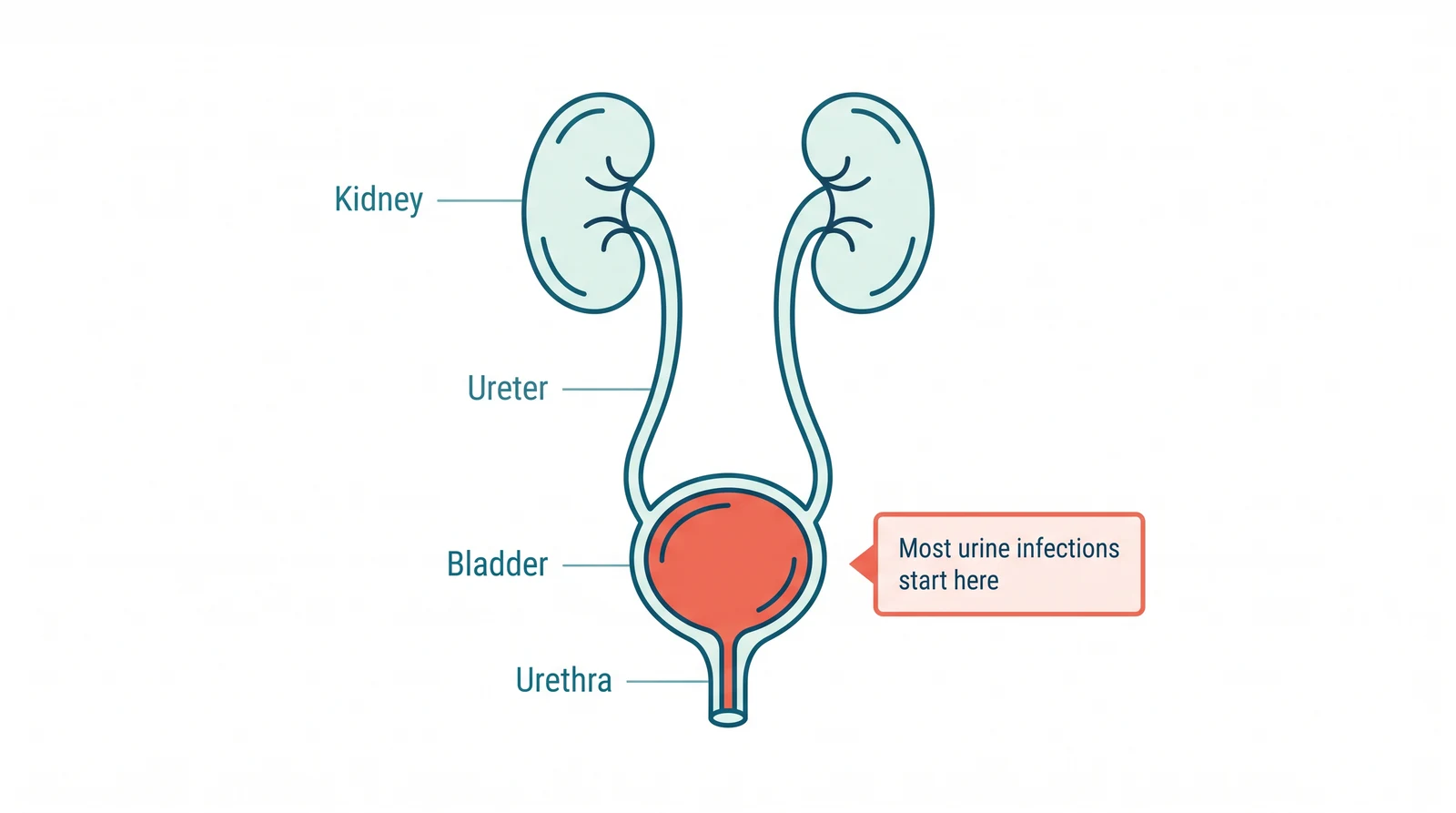
Your urinary system has four parts: two kidneys that make urine, two thin tubes (ureters) that carry it down, the bladder that stores it, and the urethra that carries it out.
A UTI happens when germs, usually bacteria from the skin or bowel, get into this system and multiply. Most infections stay low down, in the bladder. Doctors call that cystitis. A smaller number travel up to the kidney, which is more serious.
The usual signs of a bladder infection are:
- Burning or stinging when passing urine
- Needing to go often, and urgently
- Passing only small amounts each time
- Cloudy or strong-smelling urine
- Discomfort low in the tummy
Signs that the infection may have reached the kidney are different, and they matter more: fever with shivering, pain in the back or side, vomiting, and feeling generally unwell. If you have these, see a doctor the same day.
Why the urine test comes before the UTI medicine
Many people skip this step. It is the step that decides whether the treatment works.
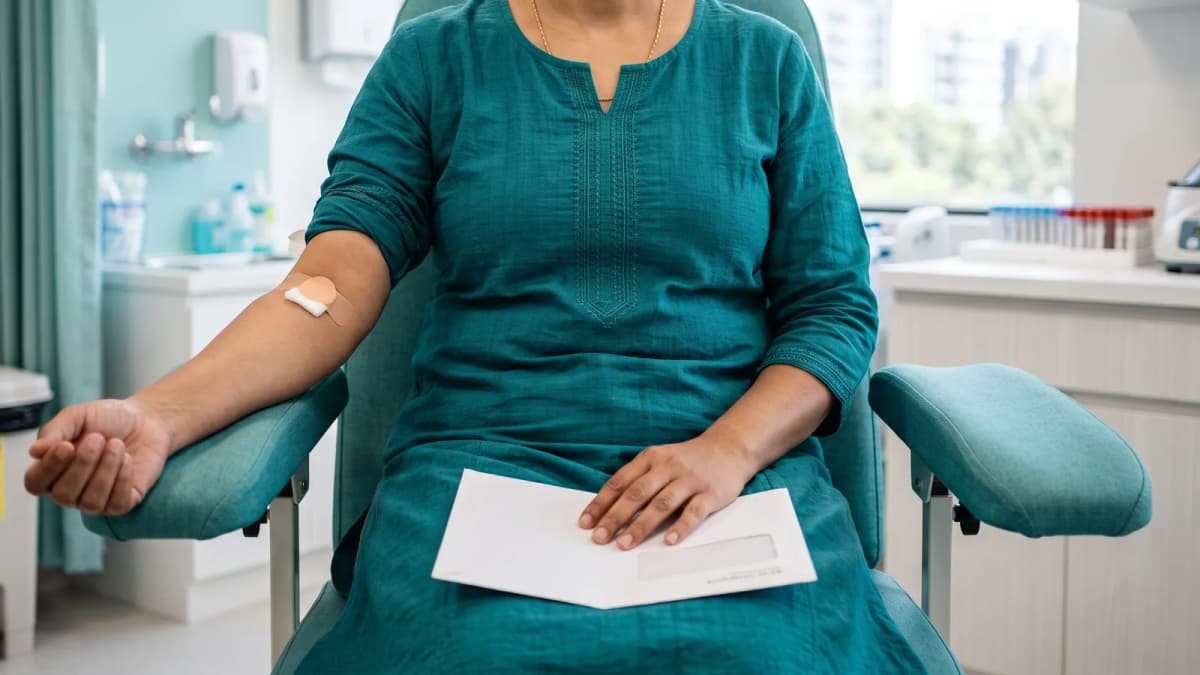
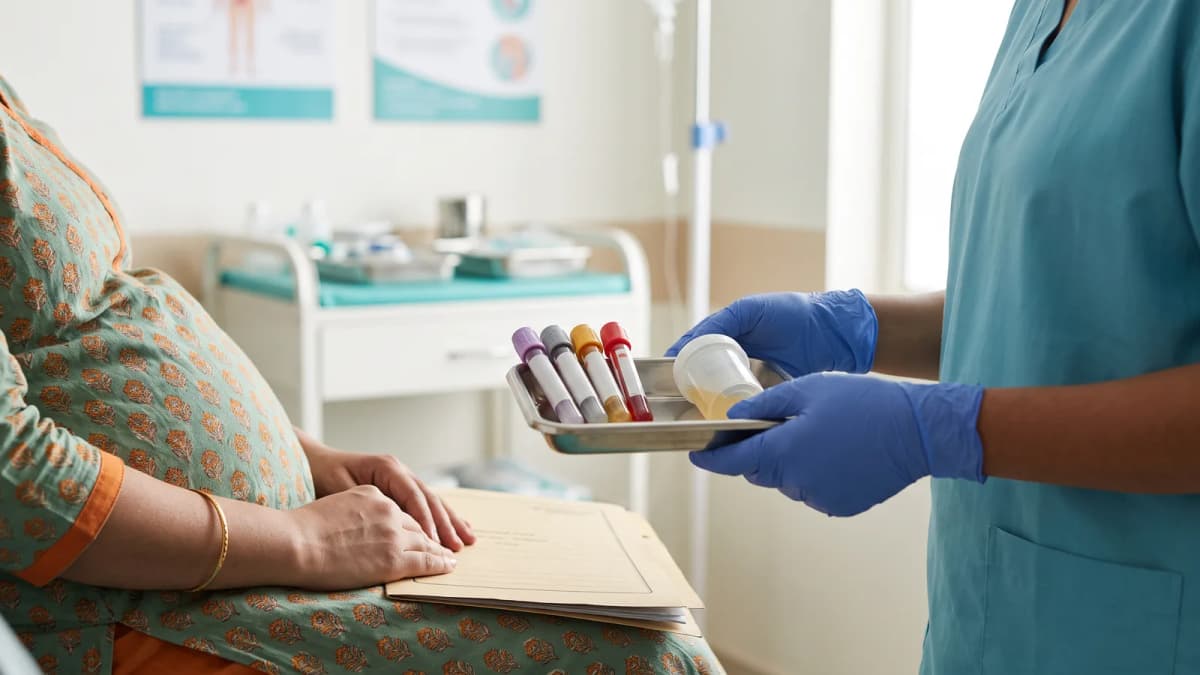
A urine routine test looks at the sample under a microscope. It shows pus cells, blood and other signs of infection. It takes a few hours. At our NABL-accredited laboratory the current price is ₹150, as listed on our tests page.
A urine culture and sensitivity test grows the germ from your sample, names it, and then tests which antibiotics kill it. It takes 48 to 72 hours, because the germ needs time to grow. The current price is ₹800.
Why does this matter? Because germs in India are increasingly resistant to common antibiotics. A tablet that cleared every urine infection ten years ago may now fail against many of them. The culture tells your doctor which medicine will work for your germ, rather than guessing.
For a simple first infection in a healthy woman, the doctor may start treatment straight away and send the culture at the same time, adjusting the medicine if the result demands it. For anyone with repeated infections, a man with a UTI, a pregnant woman, or someone with diabetes, the culture is not optional.
The tablets for urine infection, explained
Antibiotics: the only thing that cures it
The infection itself is treated with an antibiotic. Your doctor chooses which one based on the culture result if available, how severe the symptoms are, your kidney function, whether you are pregnant, and what has worked before.
A few rules that apply to every antibiotic course:
- Finish the course, even when you feel better on day two. Stopping early is how resistant germs survive.
- Do not use leftover tablets or ones a chemist suggests without a prescription. A half-course of the wrong drug makes the next infection harder to treat.
- Tell the doctor about any allergy, and about other medicines you take.
We do not list doses here on purpose. The right dose depends on the drug, your weight, your kidneys and the germ. That is a decision for the doctor in front of you.
Urine alkalisers: relief, not cure
Many people in India reach first for a urine alkaliser syrup from the chemist. These make urine less acidic, which eases the burning. They can be useful for comfort.
They do not kill bacteria. If you take only the syrup, the burning may fade while the infection carries on, and it can climb towards the kidney. Use them alongside proper treatment, not instead of it.
Pain relief and water
Simple pain relief helps the discomfort. Drinking steady amounts of water through the day helps flush the bladder. You do not need to force down litres at once.
UTI symptoms in men are different
Urine infections are far more common in women, because the urethra is shorter. That is exactly why a UTI in a man deserves more attention.
The UTI symptoms in men are similar: burning, frequency, urgency, and sometimes fever. But in men, a urine infection often has a reason behind it. The commonest are an enlarged prostate that stops the bladder emptying fully, a kidney stone, or a narrowing of the urethra.
So a man with a UTI usually needs a urine culture, often a longer course of treatment, and an ultrasound to look at the prostate and bladder. Our guide on prostate treatment medicine explains how an enlarged prostate is managed when that turns out to be the cause.
When a urine infection needs a urologist
Most first infections in women are handled well by a general doctor. See a urologist if:
- You have three or more urine infections in a year
- The infection came back soon after treatment
- You are a man with a urine infection
- There is blood in your urine
- You have a kidney stone, or pain in the side or back
- A culture shows a germ that resists many antibiotics
Repeated infections are a sign to look for a cause, not just to repeat the tablets. That might be a stone, incomplete bladder emptying, or something in the anatomy. An ultrasound and a few tests in one visit usually answer the question. If a stone is part of the picture, our article on kidney stone early signs is a good place to start.
The NHS guide to urinary tract infections and the NIDDK's page on bladder infection in adults describe these warning signs in the same terms.
Simple habits that cut the risk
- Drink enough water that your urine stays pale yellow
- Do not hold urine for long hours
- Pass urine soon after sex
- Wipe from front to back
- Keep blood sugar controlled if you have diabetes
These do not replace treatment. They do make the next infection less likely.
Care at Saroj Hospital
Dr. Jatin Jain, MBBS, DNB (General Surgery), MCh (Urology) sees patients in the urology OPD every day, 9:00–11:30 AM and 4:00–6:30 PM.
The urine test, the culture and the ultrasound are all done in the same building, so a patient with repeated infections can usually be assessed in a single visit. Bring any previous urine reports and the names of antibiotics you have already taken. That list alone often explains why the last course did not work.
Frequently asked questions
Can a UTI go away without medicine?
A mild bladder infection sometimes settles on its own in a few days, especially with plenty of water. But many do not, and an untreated infection can reach the kidney. If symptoms last more than a day or two, or you have fever or back pain, get treated.
How long does UTI medicine take to work?
Most people feel better within one to three days of starting the right antibiotic. If you are no better after two or three days, go back to the doctor. It may mean the germ is resistant, and the culture result will guide the change.
Can I take the same tablets as last time?
Not without asking a doctor. Germs differ between infections, and resistance builds with repeated use of the same drug. A fresh urine culture is the safest way to choose.
Is a urine infection serious in pregnancy?
It needs prompt treatment, because some antibiotics are unsafe in pregnancy and untreated infection carries risks for mother and baby. Pregnant women should always see their doctor rather than self-treat.
Book an appointment
If urine infections keep coming back, or you are a man with one for the first time, book a consultation. The urine test, culture and scan happen here in one visit, and you will leave knowing what the next step is.
Book an appointment with the urology OPD, or call reception on +91 96676 67011. You can book online privately, without discussing your symptoms at the front desk.
Medically reviewed by Dr. Jatin Jain, MBBS, DNB (General Surgery), MCh (Urology), Saroj Hospital, Sonipat.
This article is general health information, not medical advice. For guidance about your own health, please consult a doctor.
Consult Dr. Jatin Jain
Book a real slot online — confirmation is instant.