

You have been trying for a baby for a while. Or you are in your thirties and wondering whether to plan sooner. Someone has mentioned an "AMH test", and now you have a report with a number on it that nobody has explained.
AMH is one of the most useful fertility tests there is. It is also one of the most misunderstood. A single number can cause a lot of needless fear.
This guide covers the AMH test price at our laboratory, what the test really measures, who it is for, and how to read a high or low result without panic. Our gynaecology department in Sonipat does the blood test, the ultrasound and the consultation in one building.
AMH test meaning, in plain words
AMH stands for anti-Müllerian hormone. It is made by the small, early follicles in the ovaries. Each follicle is a tiny fluid sac that holds an immature egg.
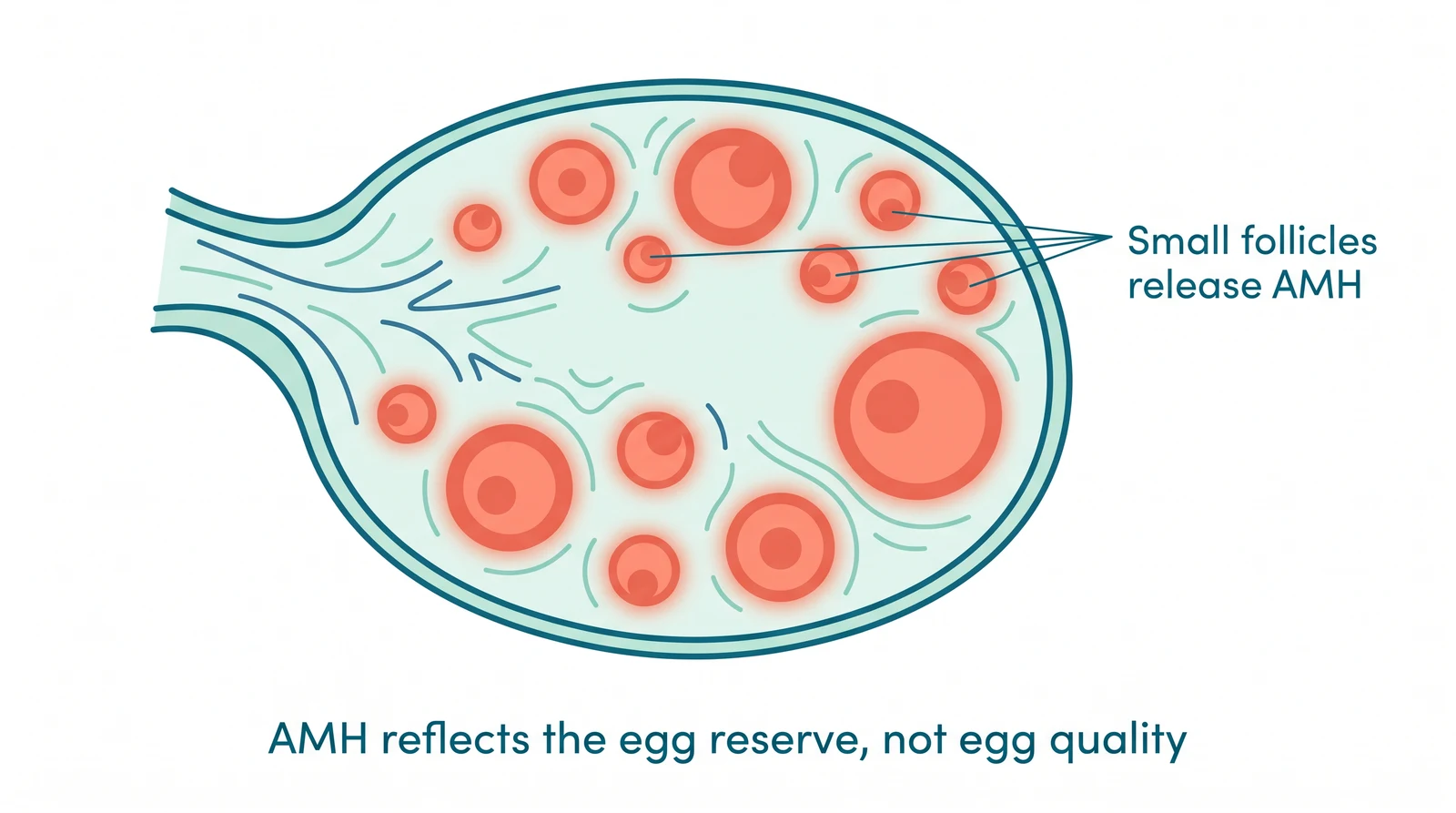
The more of these small follicles you have, the more AMH they release into the blood. So the AMH test meaning is simple: it gives an estimate of how many eggs are left in the ovaries. Doctors call this the ovarian reserve.
What AMH does not measure is just as important:
- It does not measure egg quality. Quality depends mostly on age.
- It does not tell you whether you can get pregnant naturally this month or this year.
- It does not check your tubes, your partner's sperm, or your womb.
AMH test for what? Who needs it
People often ask "AMH test for what purpose?" The honest answer is that it helps with planning, not with predicting.
Your gynaecologist may suggest it if:
- You have been trying to conceive for a year (or six months if you are over 35) without success.
- You are planning fertility treatment such as IVF. AMH helps the doctor choose the right medicine dose and predict how the ovaries may respond.
- You have irregular periods, especially if PCOS is suspected. Women with PCOS often have a high AMH because they have many small follicles.
- You need treatment that may affect the ovaries, such as some surgeries or chemotherapy.
- You want to understand your timeline before deciding when to start a family.
The test is not useful as a general check for women who are not trying to conceive and have no symptoms.
AMH test price at Saroj Hospital
The current AMH test price at our NABL-accredited laboratory is ₹2,000, as listed on our tests page. That page always shows the latest figure.
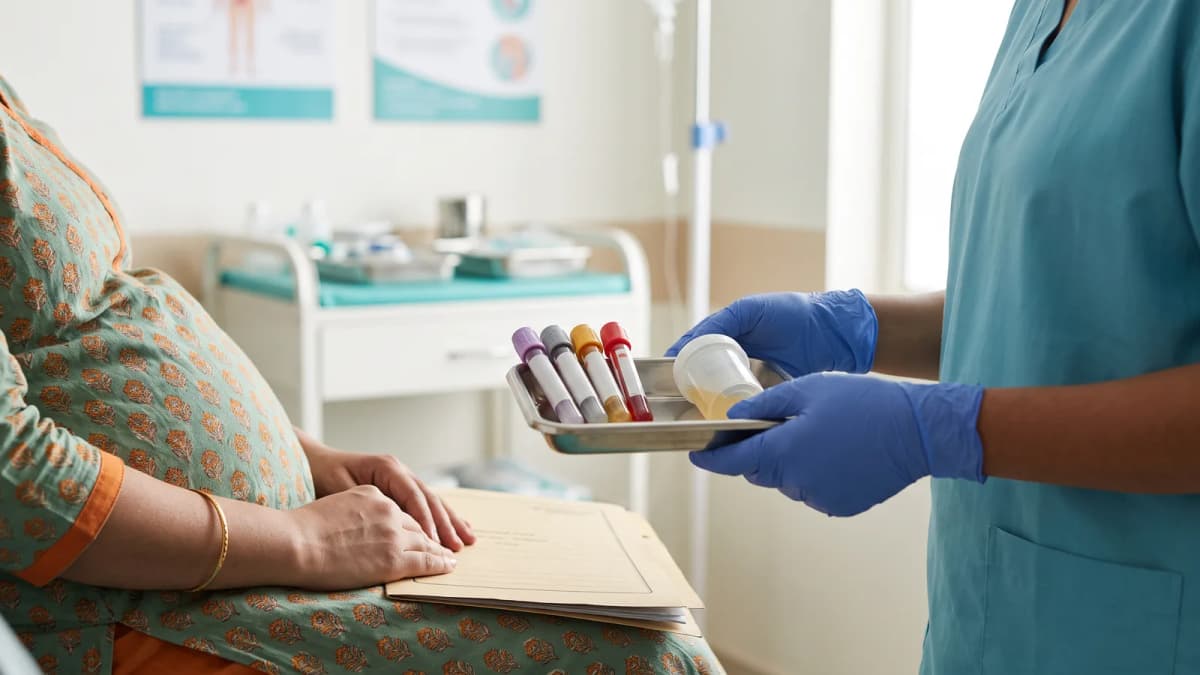
It is a single blood sample. You do not need to fast. Unlike many hormone tests, AMH stays fairly steady through the menstrual cycle, so it can usually be done on any day.
If you are being assessed for fertility, your doctor may add other tests at the same visit, such as FSH, LH, thyroid and prolactin, along with a pelvic ultrasound to count the follicles directly. All are done here.
Reading a low AMH
This is the result that frightens people most. So let us be clear: a low AMH does not mean you cannot get pregnant.
Many women with a low AMH conceive naturally. A low result means fewer eggs remain, not that the remaining eggs are poor. Your chance of pregnancy each month depends mainly on egg quality, which is tied to age, and a 30-year-old with a low AMH often does better than a 40-year-old with a normal one.
What a low AMH does suggest:
- It may be wise not to delay trying for too long.
- If IVF is needed, fewer eggs may be collected per cycle.
- It is worth seeing a gynaecologist to plan sensibly.
Reading a high AMH
A high AMH usually means plenty of small follicles. The commonest reason is polycystic ovary syndrome (PCOS).
A high AMH is not a problem on its own. But if your periods are irregular, it can be one piece of the PCOS picture. Our guide to getting pregnant with PCOS explains what helps, and PCOD problem after marriage covers the symptoms many women first notice.
Why the number needs a doctor
AMH ranges differ between laboratories and testing methods, and they fall naturally with age. A result that is "low" for a 28-year-old may be quite usual at 40. So the report should always be read against your age and alongside your scan, your periods and your history.
The MedlinePlus guide to the AMH test and the NHS overview of infertility both describe AMH as one part of a wider fertility assessment, not a verdict on its own.
Questions worth asking about your result
Take these to your appointment. They turn a number into a plan:
- Is my AMH usual for my age?
- Does my ultrasound follicle count agree with it?
- Given my age and this result, how soon should we try, and for how long before treatment?
- Should my partner be tested as well? In many couples the cause lies with the man, or with both.
Care at Saroj Hospital
Dr. Deepa Aggarwal, MBBS, DGO, DMRD, DNB (Radiology) sees patients in the gynaecology OPD every day, 10:00 AM–2:00 PM and 5:00–7:00 PM.
Because she is qualified in both gynaecology and radiology, she can count the follicles on ultrasound herself and read that alongside your AMH. Fertility conversations are private and often emotional. Couples are welcome to come together, and you can book online without explaining your reason at the front desk.
Frequently asked questions
Can AMH tell me when I will reach menopause?
Not reliably. AMH falls as menopause approaches, but it cannot predict the year for an individual woman. It is better at estimating how the ovaries will respond to fertility treatment.
Can I increase my AMH?
No treatment reliably raises the number of eggs. A healthy weight, not smoking and good overall health support fertility, but they do not change the egg reserve. Be wary of products that claim to boost AMH.
Does a normal AMH mean I am fertile?
Not on its own. A normal AMH shows a reasonable egg reserve, but pregnancy also needs regular ovulation, open tubes, healthy sperm and a healthy womb. Your doctor will check the other pieces too.
Which day of my period should I take the AMH test?
Usually any day. AMH changes little across the cycle, so it does not need to be timed like FSH or LH. Your doctor may still group it with other tests that do need timing.
Book an appointment
If you have been trying to conceive, or want to understand your fertility before planning, book a consultation. The blood test, the scan and the gynaecologist are all in one place, and you will leave with a clear plan rather than just a number.
Book an appointment with the gynaecology OPD, or call reception on +91 96676 67011.
Medically reviewed by Dr. Deepa Aggarwal, MBBS, DGO, DMRD, DNB (Radiology), Saroj Hospital, Sonipat.
This article is general health information, not medical advice. For guidance about your own health, please consult a doctor.
Consult Dr. Deepa Aggarwal
Book a real slot online — confirmation is instant.