You look down and the urine is pink, or red, or the colour of strong tea. There is no pain. By the next visit to the toilet it looks normal again, and you wonder whether to mention it at all.
Please do. Blood in urine has many causes, and treatment depends on which one it is. Often it is something simple, such as an infection or a stone. But it is also the most common early sign of conditions that are far easier to treat when found early. Even one episode, even without pain, deserves a check.
This guide explains the usual causes, how the right blood in urine treatments depend on finding the cause, what blood clots mean, and the tests involved. Our urology department in Sonipat can do the urine tests and ultrasound in one visit.
Two kinds of blood in urine
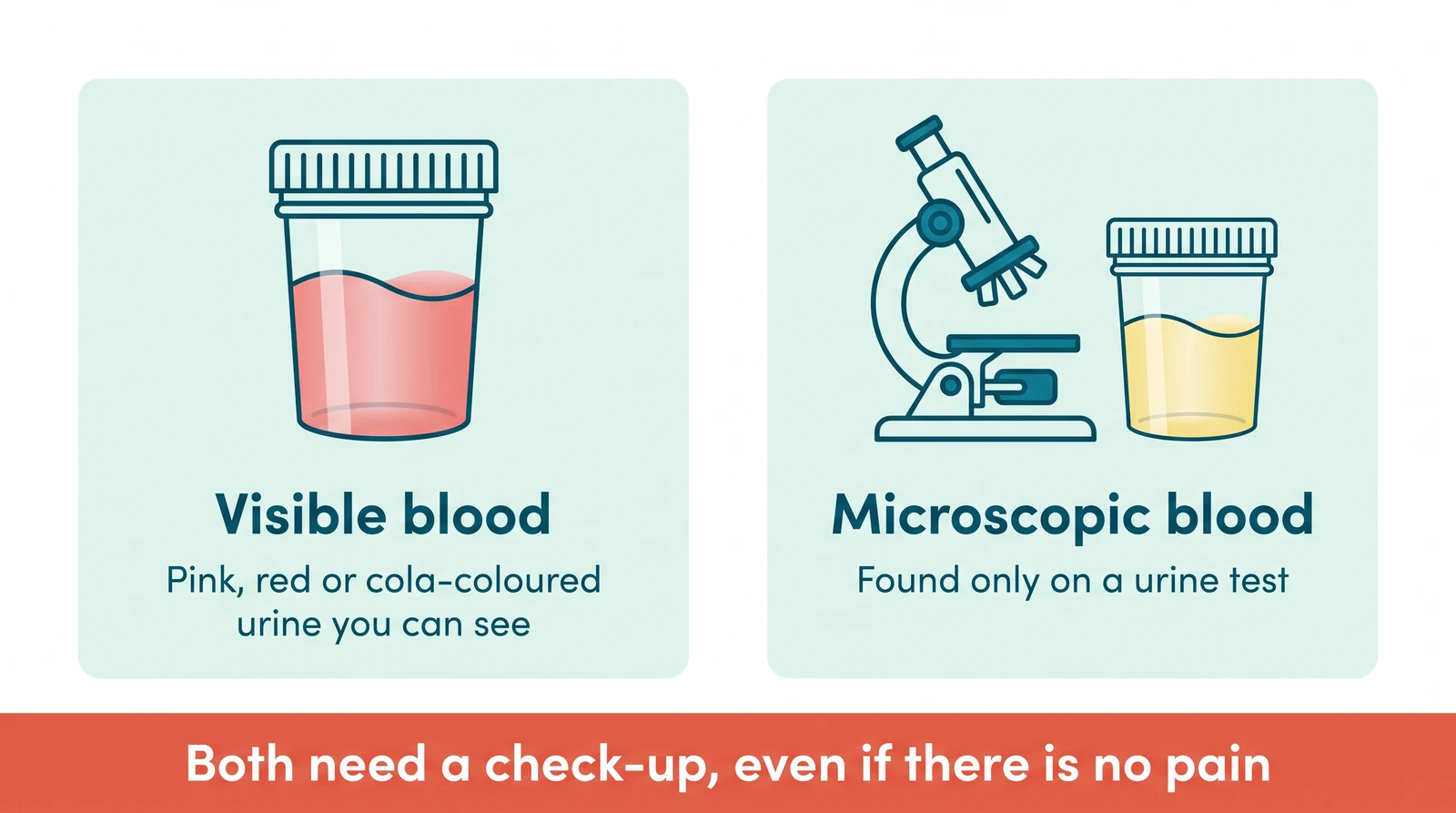
Visible blood is blood you can see. Urine may look pink, red, brown or cola-coloured. Doctors call this gross haematuria.
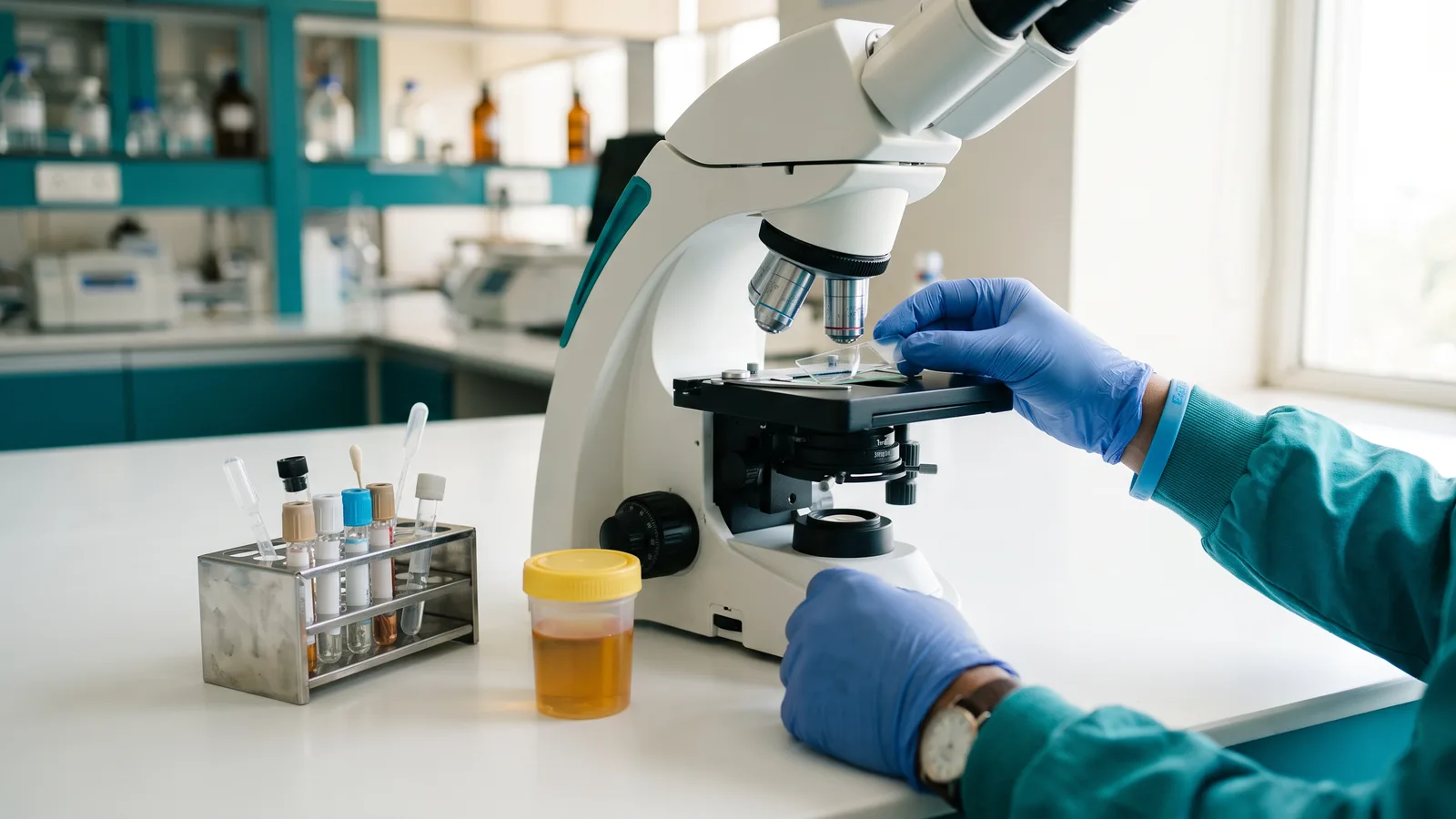
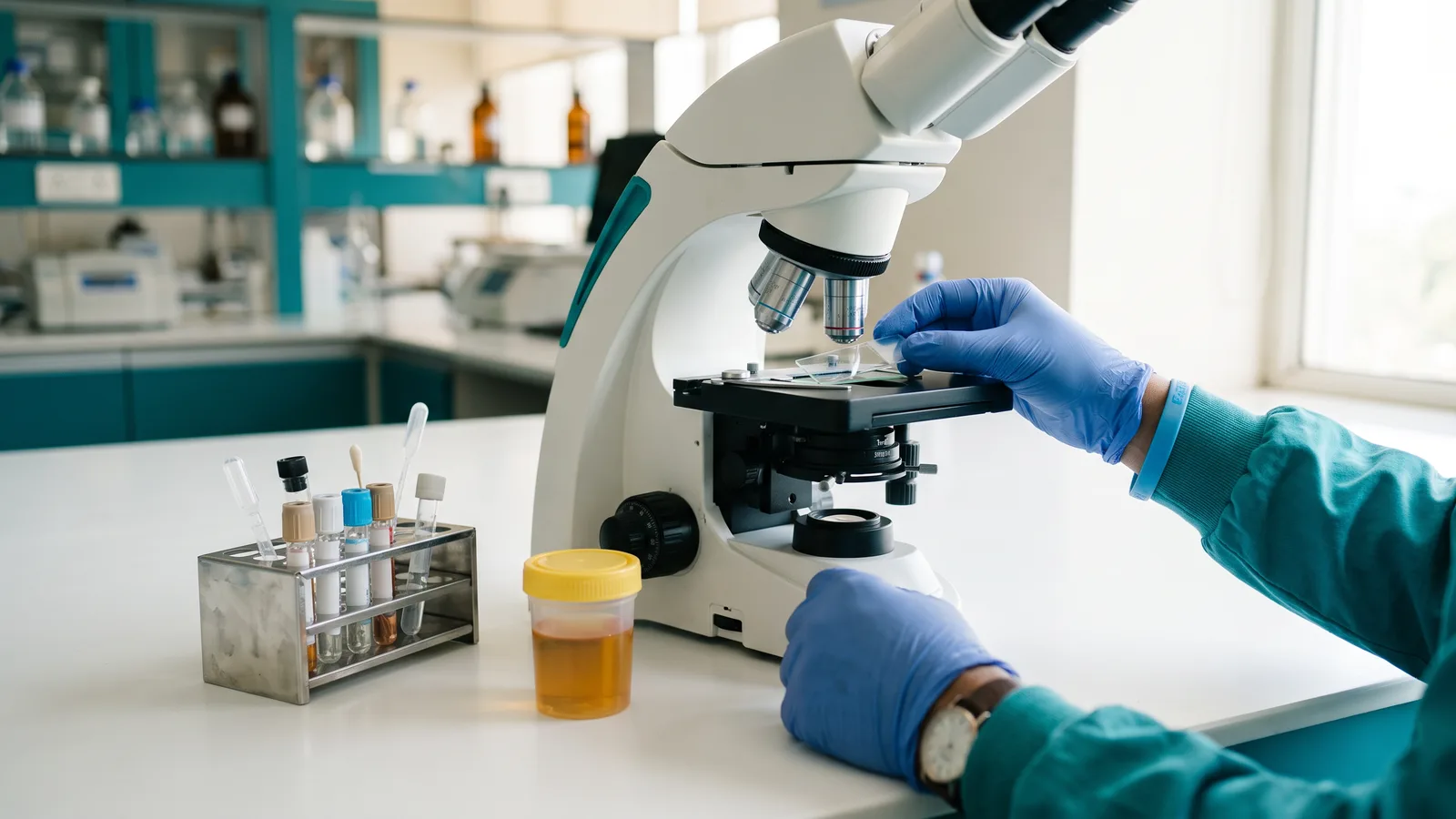
Microscopic blood cannot be seen. It shows up only when urine is tested, often during a routine check-up.
Both need to be looked into. Visible blood usually needs a fuller check sooner.
Not every red colour is blood
Some foods and medicines can colour urine red or orange without any blood in it. Beetroot is the classic example. Some antibiotics and painkillers can do it too. Women may find blood from a period has mixed with the sample.
A simple urine test tells the difference in a few minutes. That is why you should not guess from the colour alone.
The common causes
Urine infection. Often comes with burning and needing to go often. Our guide to UTI medicine explains how infections are found and treated.
Kidney or bladder stones. Usually come with pain in the side, back or groin, though not always. Read more in kidney stone early signs.
An enlarged prostate. In men over fifty, the enlarged gland has fragile blood vessels that can bleed. Our guide on prostate treatment medicine covers this condition.
Hard exercise. Long-distance running and very heavy exertion can cause a little blood that settles within a day or two.
Blood-thinning medicines. These can make bleeding more likely, but they do not explain it on their own. The cause still needs to be checked.
Kidney conditions. Some kidney diseases let blood leak into the urine, often with protein too.
Cancers of the bladder, kidney or prostate. These are less common, but blood in the urine is often their first sign. The risk is higher in people over forty and in smokers. Painless visible blood is the pattern that most needs checking.
Blood clots in urine
Blood clots in urine usually mean more bleeding than a few streaks. They can come from the bladder, the prostate or the kidneys.
See a doctor the same day if you pass clots. Go to an emergency department straight away if clots stop you passing urine, or if you have heavy bleeding, fever, or feel faint. A bladder blocked by clots is painful and needs urgent relief.
When to see a blood in urine urologist
Make an appointment with a blood in urine urologist if:
- You have seen blood in your urine, even once, even without pain
- A urine test has found blood on more than one occasion
- You are over forty, or you smoke or used to smoke
- You also have burning, frequency, side pain or fever
- You take blood thinners and have noticed blood
Do not wait to see if it happens again. Bleeding that stops does not mean the cause has gone.
The NHS guide to blood in urine and the NIDDK guide to hematuria give the same advice: always have it checked.
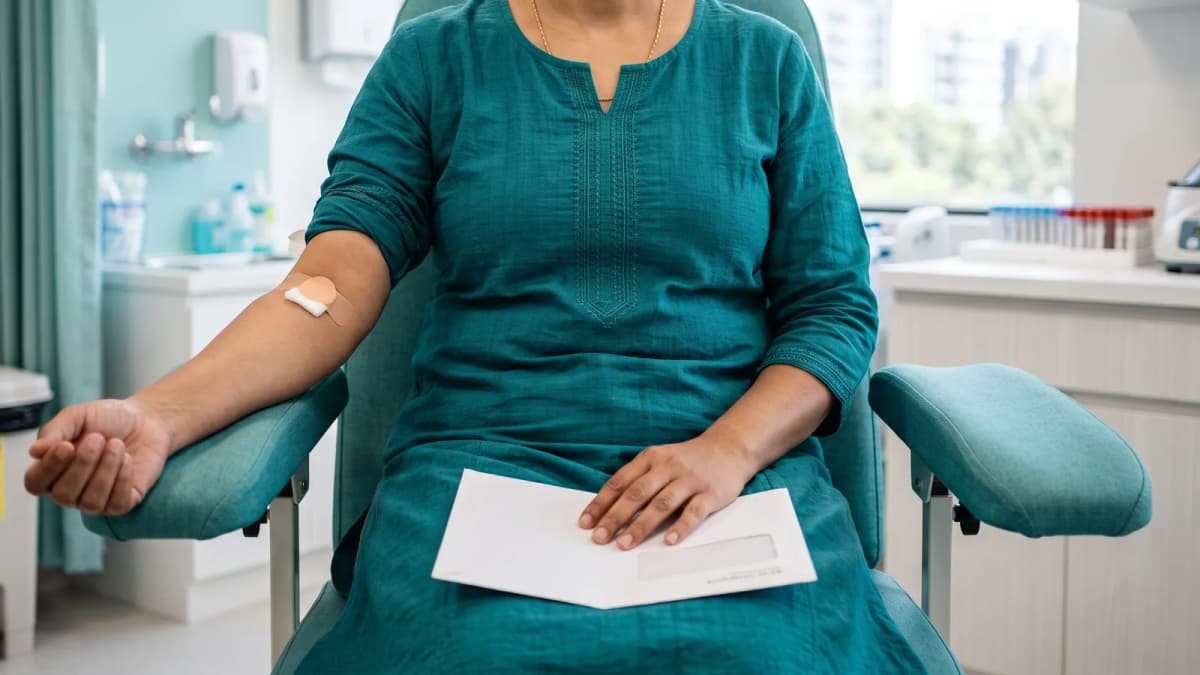
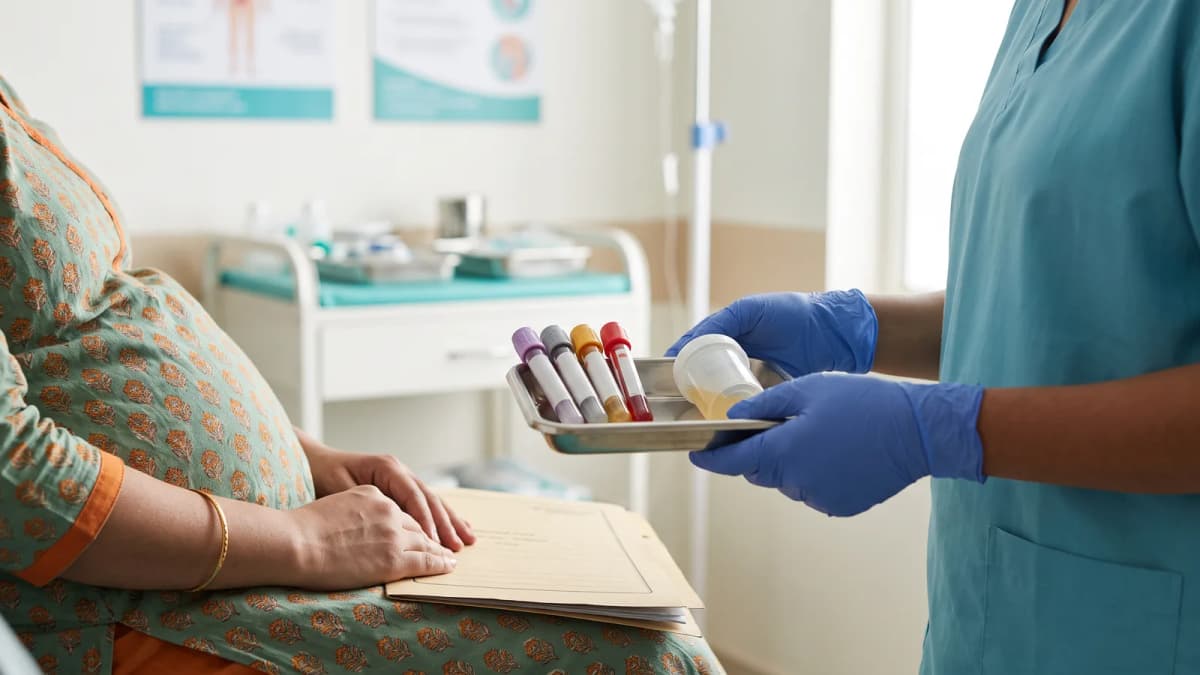
The tests that find the cause
Your urologist will choose the tests based on your age and symptoms. They usually start simply:
Urine routine and microscopy. Confirms there is blood and looks for infection and crystals. The current price is ₹150, as listed on our tests page.
Urine culture. Grows any germ and shows which antibiotic will work. The current price is ₹800.
Kidney function test. Checks the kidneys are working well. The current price is ₹500.
Ultrasound. Looks at the kidneys, bladder and, in men, the prostate, for stones, growths or enlargement.
Depending on these, your urologist may suggest a CT scan of the urinary system, or a cystoscopy, where a thin camera looks inside the bladder. Cystoscopy is a short procedure and is the most reliable way to check the bladder lining.
Blood in urine treatments depend on the cause
There is no single tablet for blood in the urine. Treatment is aimed at whatever is causing it:
- An infection is treated with the right antibiotic, chosen from the culture.
- A stone may pass with medicine and water, or may need laser treatment.
- An enlarged prostate is often treated with medicines that shrink the gland or relax it.
- A kidney condition may need care from a kidney specialist.
- A growth found early has far more treatment options.
This is why finding the cause matters more than stopping the colour. Bleeding can stop on its own while the cause carries on.
Care at Saroj Hospital
Dr. Jatin Jain, MBBS, DNB (General Surgery), MCh (Urology) sees patients in the urology OPD every day, 9:00–11:30 AM and 4:00–6:30 PM.
Bring any urine reports you have, a list of your medicines including blood thinners, and a note of when you saw blood. The urine tests and the ultrasound are done here, usually on the same visit.
Frequently asked questions
Is blood in urine always serious?
No. Most often it is caused by an infection, a stone or an enlarged prostate. But because it can be the first sign of something serious, it should always be checked, even if it happens only once.
Can blood in urine go away on its own?
The bleeding often stops by itself. That does not mean the cause has gone. Get it checked even if your urine looks normal again.
Does painless blood in urine matter?
Yes. Painless visible blood in the urine is the pattern doctors most want to investigate, especially in people over forty and in smokers. Do not let the lack of pain delay a check-up.
What should I do if I pass blood clots?
See a doctor the same day. If clots stop you passing urine, or you have heavy bleeding or feel faint, go to an emergency department straight away.
Book an appointment
If you have seen blood in your urine, book a consultation now rather than waiting to see if it returns. The tests and the urologist are under one roof, and most of the answers come in a single visit.
Book an appointment with the urology OPD, or call reception on +91 96676 67011.
Medically reviewed by Dr. Jatin Jain, MBBS, DNB (General Surgery), MCh (Urology), Saroj Hospital, Sonipat.
This article is general health information, not medical advice. For guidance about your own health, please consult a doctor.
Consult Dr. Jatin Jain
Book a real slot online — confirmation is instant.