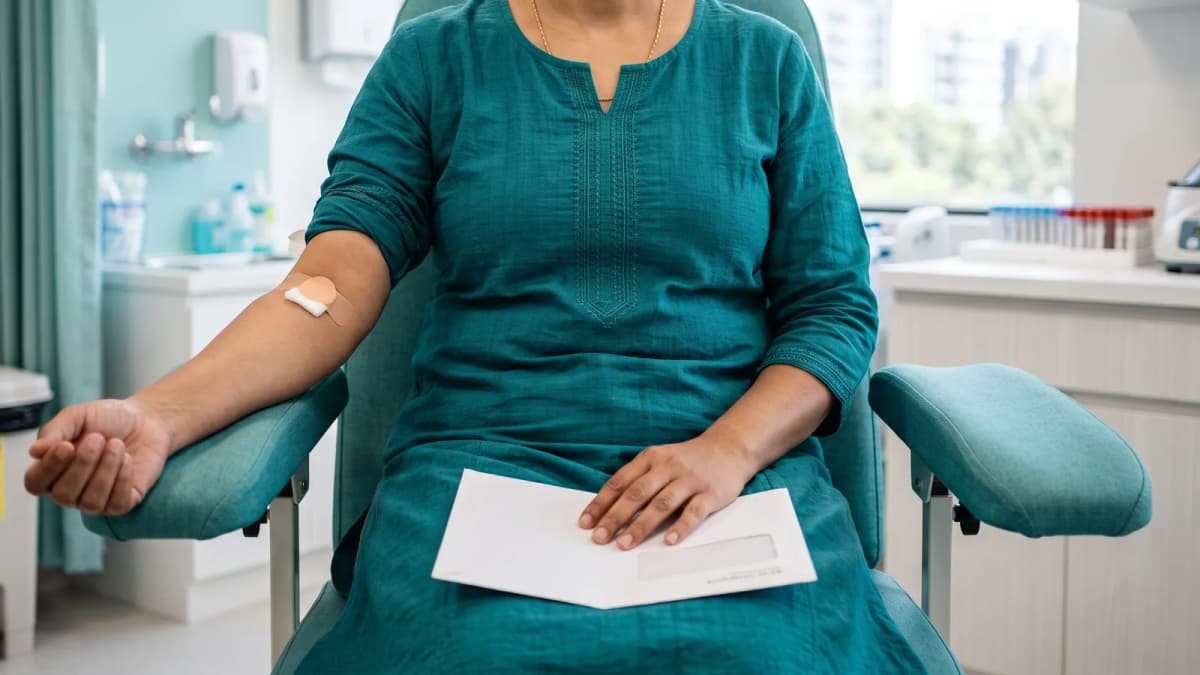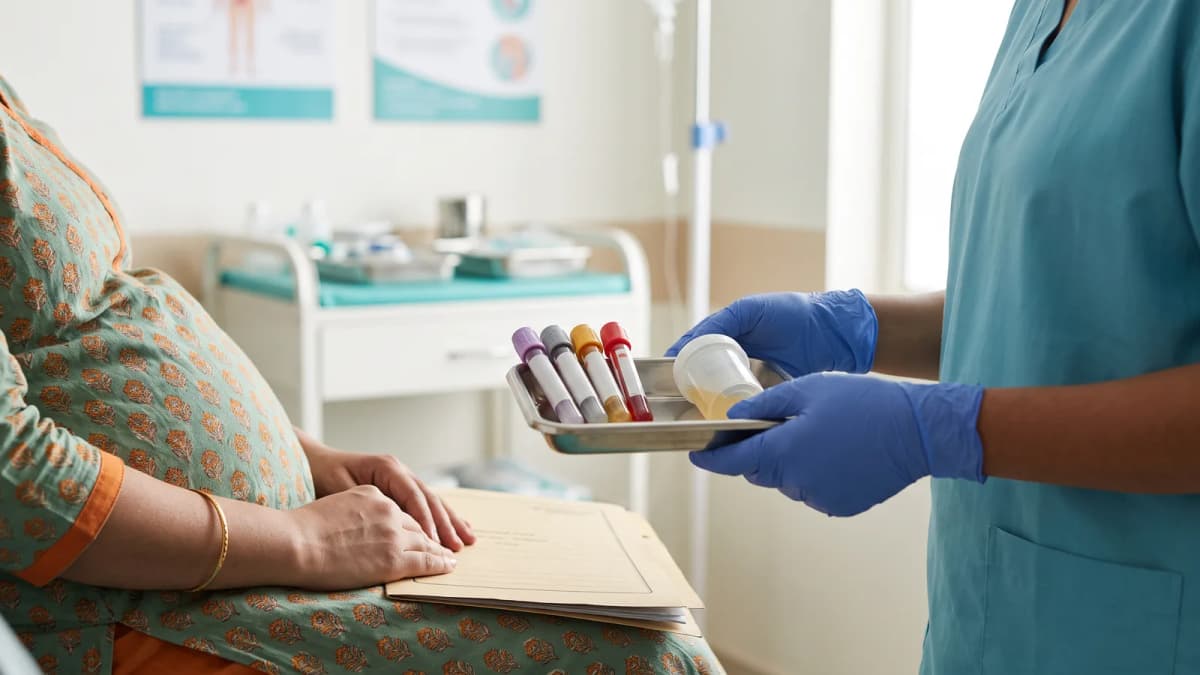
Many women in our OPD have heard of the Pap smear. Far fewer have had one. When we ask why, the answers are honest. "I feel fine." "I was scared it would hurt." "I did not know whom to ask." And quite often, "My mother never had one."
A Pap smear test is one of the few tests in medicine that can stop a cancer before it starts. It takes about five minutes. For most women it is uncomfortable for a moment, not painful. This guide explains who needs it, how it is done, how to prepare, and what the result means.
At our gynaecology department in Sonipat, the test is done by a woman doctor, in a private room, with a female attendant present.
What the test looks for
The cervix is the neck of the womb, at the top of the vagina. Over years, its cells can slowly change. These early changes cause no pain and no symptoms. Left alone, a small number can turn into cervical cancer, usually over ten years or more.
A Pap smear collects a few of these cells so they can be checked under a microscope. Abnormal cells found early are easy to treat, often with a small procedure in the clinic. That is the whole point of the test. It finds the problem while it is still small.
Most of these cell changes are caused by HPV, a very common virus passed on through sex. Most HPV infections clear by themselves. A few stay and cause changes, which is why regular checks matter even if you feel completely well.
Which women should have a Pap smear test
Women are usually advised to start regular screening in their twenties and continue until about 65. Your gynaecologist will suggest the right age and interval for you.
As a rough guide:
- Every three years is common for a Pap smear alone.
- The gap may be longer if an HPV test is done as well and both are normal.
- Women with past abnormal results, or a weakened immune system, may need it more often.
You still need screening if you have had the HPV vaccine, if you have only one partner, or if you have not had sex for many years. Women who have had a full hysterectomy for a non-cancer reason may not need it. Ask your doctor.
How a Pap smear is done
Knowing how a Pap smear is done takes away most of the fear. This is what happens.
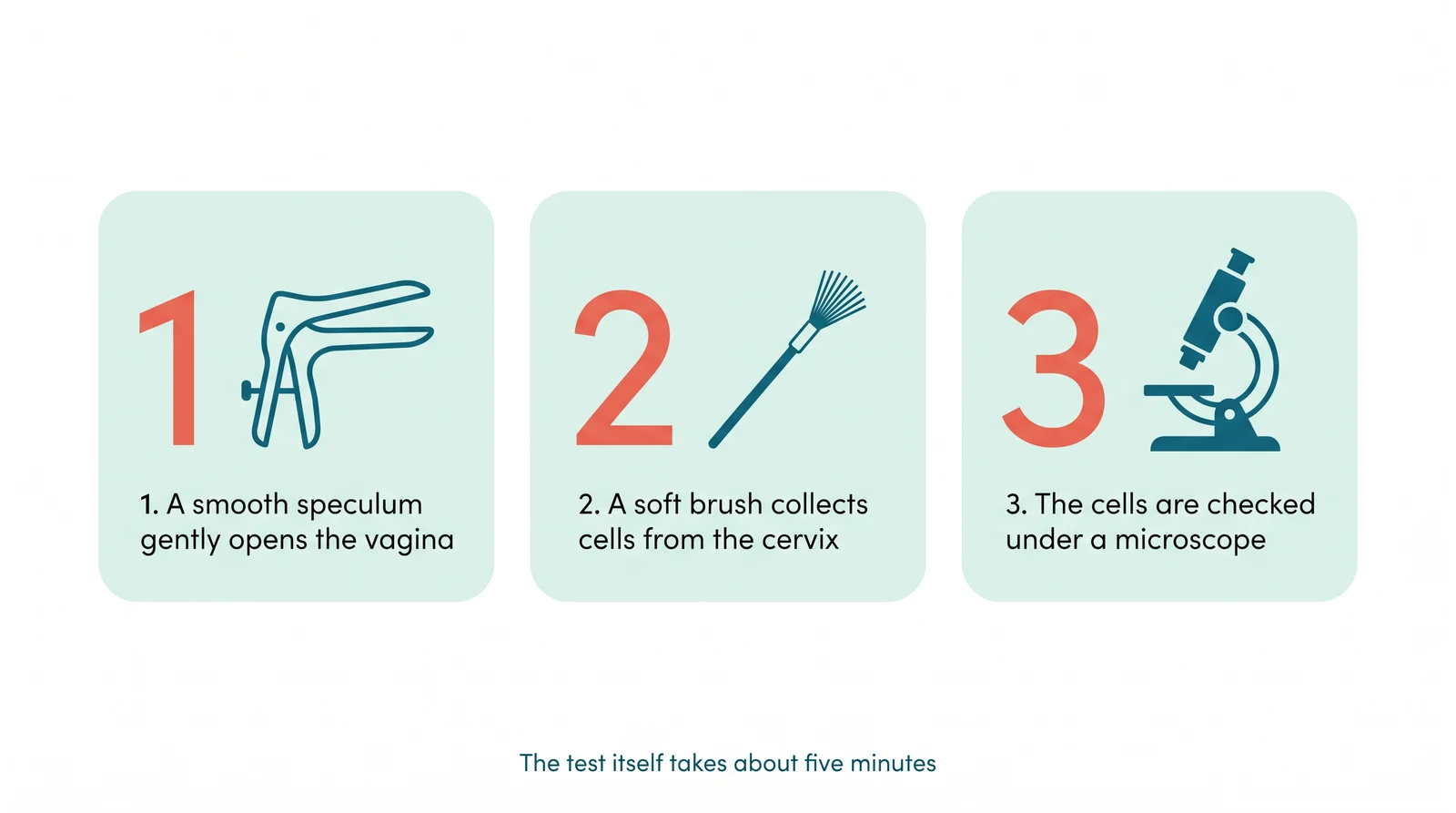
You lie on the examination couch with your knees bent and apart, covered with a sheet. The doctor gently places a smooth instrument called a speculum into the vagina. It opens slightly, so the cervix can be seen. This part can feel like pressure.
A small, soft brush then sweeps the surface of the cervix for a few seconds. Some women feel a brief scratch or cramp. The speculum is removed, and it is over.
The whole thing usually takes less than five minutes. A tip from experience: slow breaths and relaxed thigh muscles make it easier. If anything hurts, say so. The doctor can stop, change the size of the speculum, or go more slowly.
You may see a little spotting afterwards. That is normal and settles within a day.
Conventional smear or liquid based cytology?
There are two ways to handle the cells once they are collected.
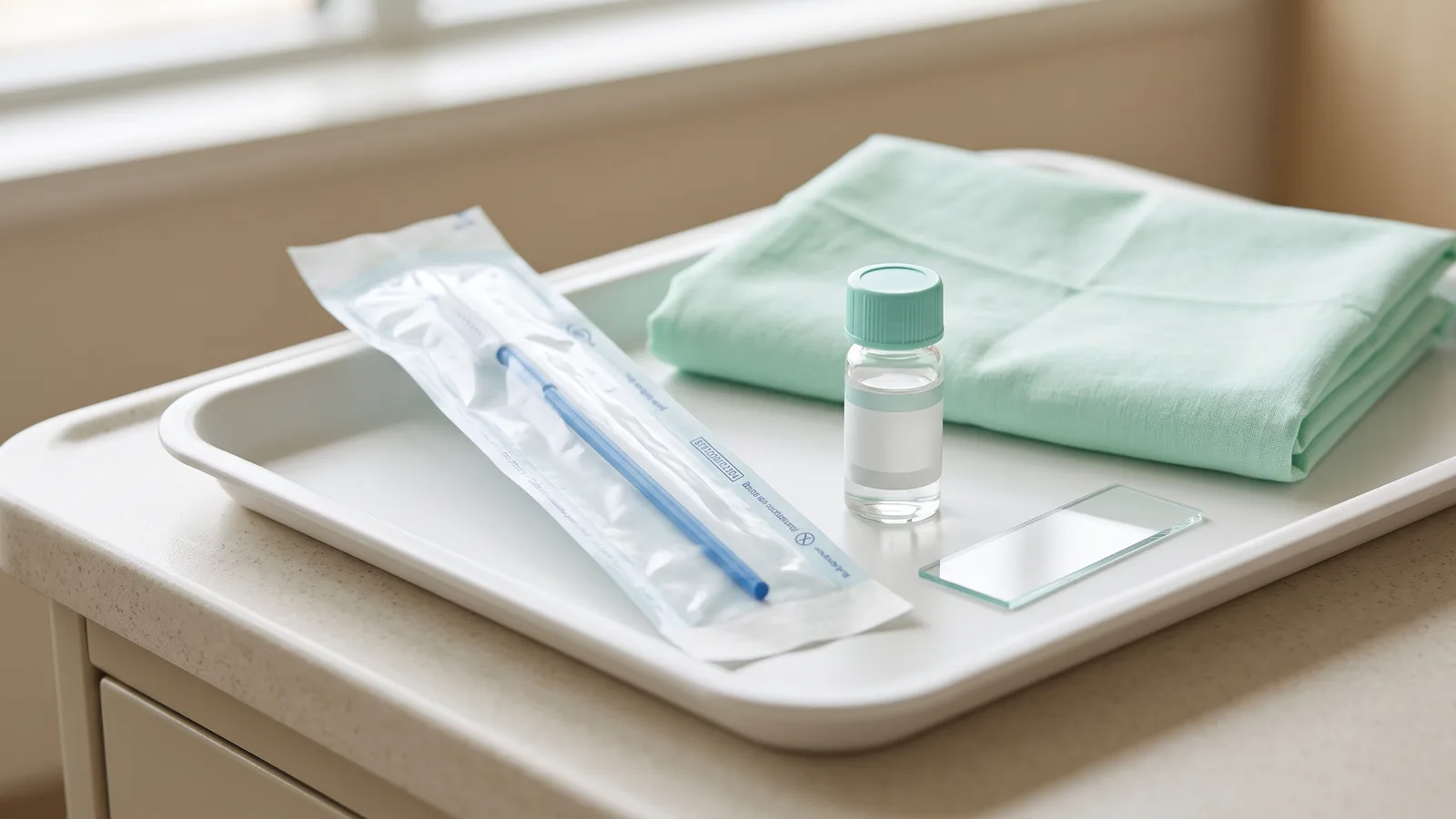
In a conventional smear, the cells are spread straight onto a glass slide. It is the older method and still works well.
In liquid based cytology, the brush is rinsed into a small vial of fluid. The lab then prepares a cleaner, thinner layer of cells. Fewer samples need repeating because of blood or mucus, and the same sample can sometimes be used for extra tests.
At our NABL-accredited laboratory, the current price is ₹800 for a conventional Pap smear and ₹1,200 for liquid based cytology, as listed on our tests page. Results usually take three to five days, because a pathologist reads every slide.
How to prepare
A few small steps give the clearest sample.
- Book the test for a day when you are not bleeding. Mid-cycle is ideal.
- Avoid sex, vaginal creams, pessaries and douching for two days before.
- If you have an infection or unusual discharge, tell the doctor. It may be treated first.
- You can eat and drink normally. No fasting is needed.
Reading the result
Most Pap smears come back normal. You simply repeat it at the interval your doctor advises.
Sometimes the report says the sample was unsatisfactory. This is not a bad result. It just means there were too few cells to read, and the test is repeated.
If the report shows abnormal cells, please do not panic. Most abnormal results are mild changes, not cancer. Many clear without treatment. Your doctor may suggest a repeat test in a few months, or a closer look at the cervix with a magnifying instrument, called colposcopy.
The NHS guide to cervical screening, the US National Cancer Institute's fact sheet on Pap and HPV testing and the WHO fact sheet on cervical cancer all explain these results in the same steady way.
Booking with Dr. Deepa Aggarwal
Dr. Deepa Aggarwal, MBBS, DGO, DMRD, DNB (Radiology) sees patients in the gynaecology OPD every day, 10:00 AM–2:00 PM and 5:00–7:00 PM.
Many women are more comfortable with a lady doctor for this test, and that is completely understood. You can book online without explaining your reason at reception. If you have other concerns, such as irregular periods, our guide to PCOD problems after marriage may help, and the Pap smear can be done in the same visit.
Common questions
Does a Pap smear test hurt?
For most women it feels like pressure and a quick scratch, and it lasts a few minutes. It should not be truly painful. Tell the doctor if it hurts, and they can adjust the speculum or slow down.
Can I have a Pap smear during my period?
It is better not to. Blood can make the sample hard to read. Book for a day when you are not bleeding, ideally in the middle of your cycle.
Can unmarried women have a Pap smear?
Screening is advised once a woman is sexually active, whether or not she is married. If you have never been sexually active, discuss with your doctor whether and when you need it.
Is a Pap smear the same as an internal ultrasound?
No. A Pap smear collects cells from the cervix to check for early changes. An internal ultrasound takes pictures of the womb and ovaries. They answer different questions, and your doctor may suggest one, the other, or both.
Book an appointment
If you have never had a Pap smear, or your last one was more than three years ago, book one now. It is five minutes for real peace of mind.
Book an appointment with the gynaecology OPD, or call reception on +91 96676 67011.
Medically reviewed by Dr. Deepa Aggarwal, MBBS, DGO, DMRD, DNB (Radiology), Saroj Hospital, Sonipat.
This article is general health information, not medical advice. For guidance about your own health, please consult a doctor.
Consult Dr. Deepa Aggarwal
Book a real slot online — confirmation is instant.