
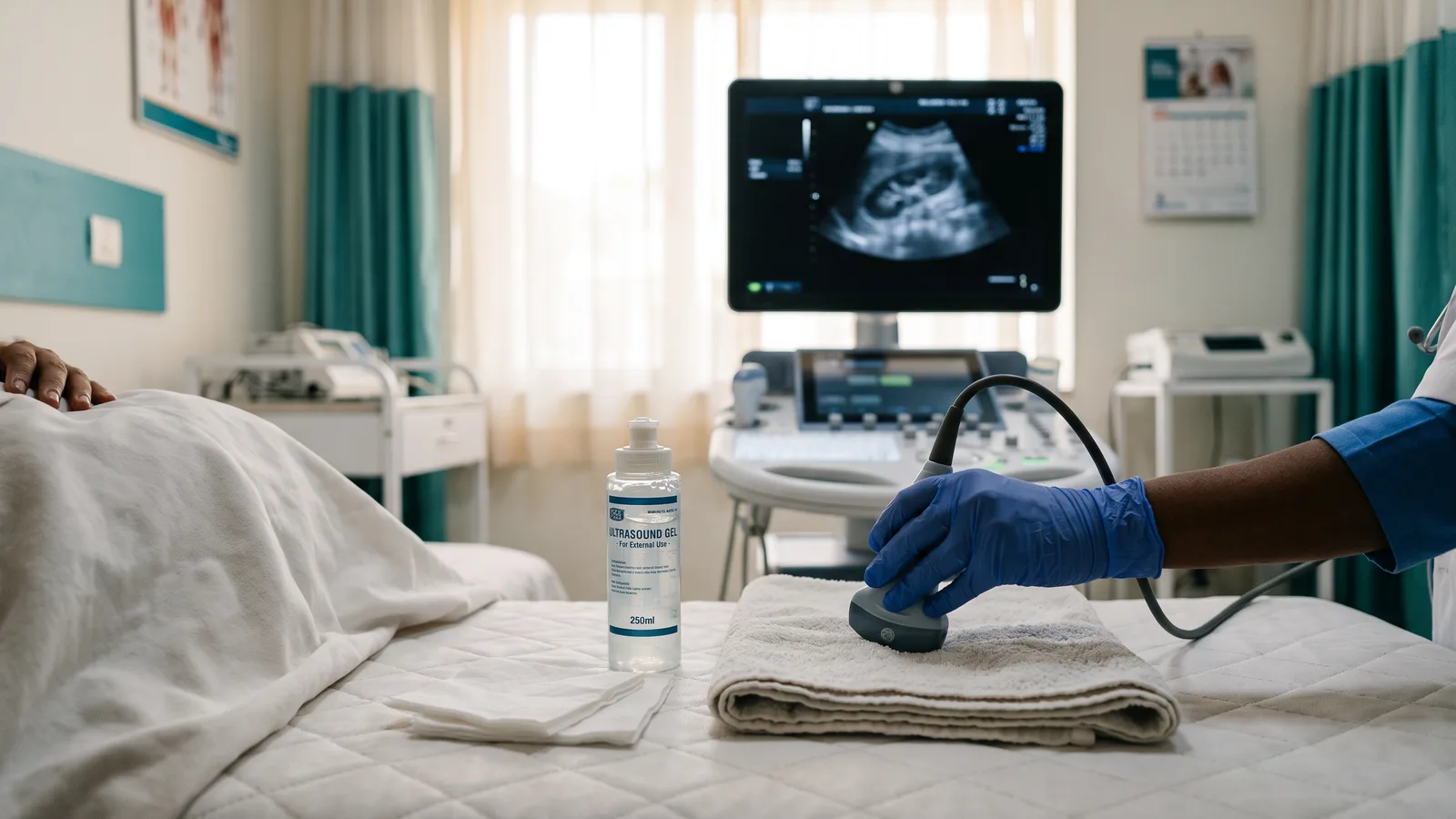
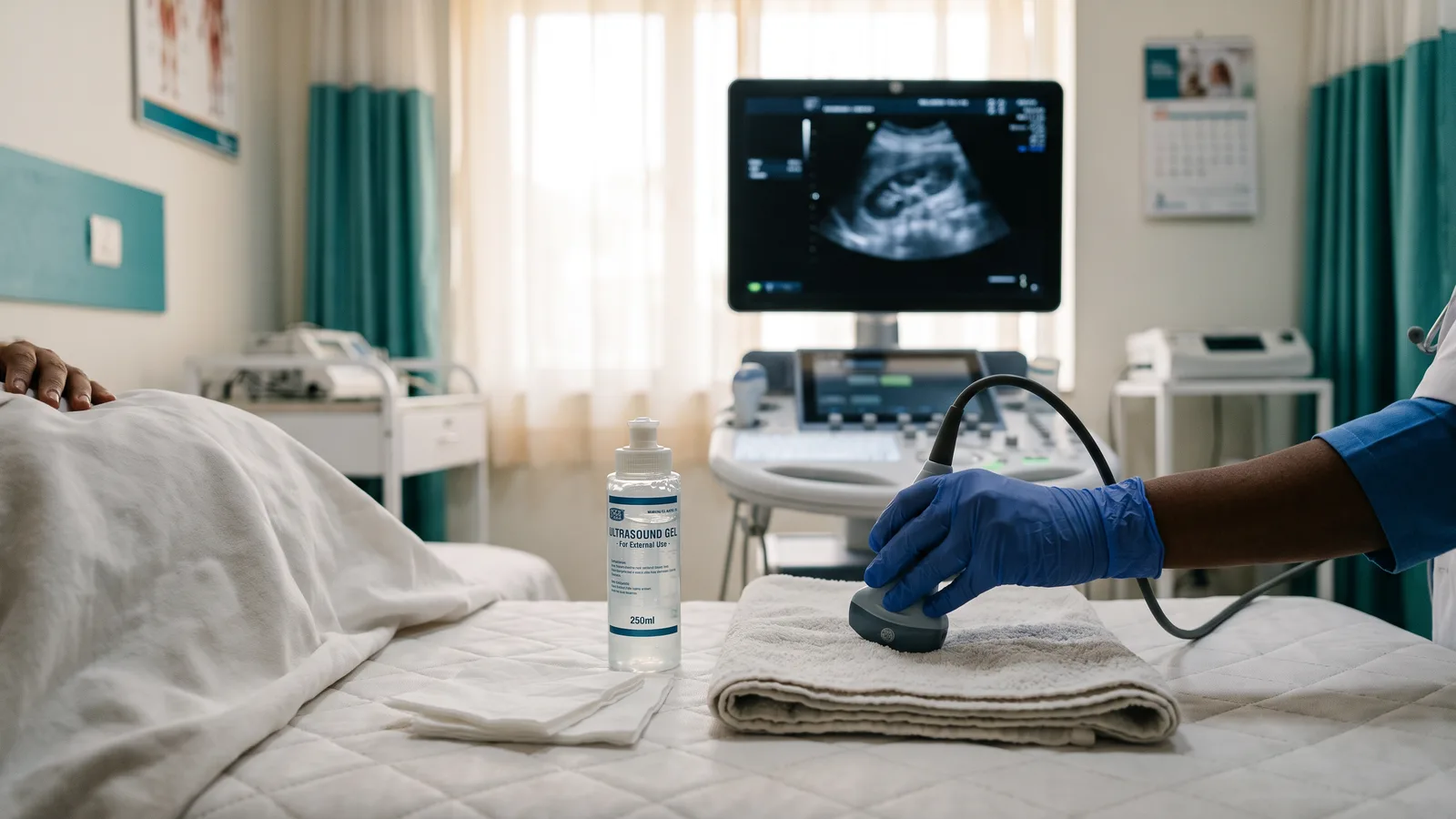
The word on the ultrasound report is long enough to frighten anyone. Hydroureteronephrosis. Patients often bring the report folded small, as if hiding it, and the first thing they ask is whether the kidney is failing.
Usually it is not. The word describes a shape, not a disease. It tells us that urine is backing up, and that something lower down is in the way. Find that something, and hydroureteronephrosis treatment becomes much simpler than the name suggests.
This guide explains what the report means, the usual causes, the tests that find them, and how each one is treated. Our urology department in Sonipat does the scan, the blood and urine tests, and the consultation in one building.
Breaking down the long word
It is three medical words joined together.
- Hydro means water, or here, urine.
- Uretero refers to the ureter, the thin tube that carries urine from the kidney to the bladder.
- Nephrosis refers to the kidney.
So the report is saying that both the kidney and its ureter are swollen with urine. When only the kidney is swollen, the report says hydronephrosis instead. Both point to the same question. Where is the urine getting stuck?
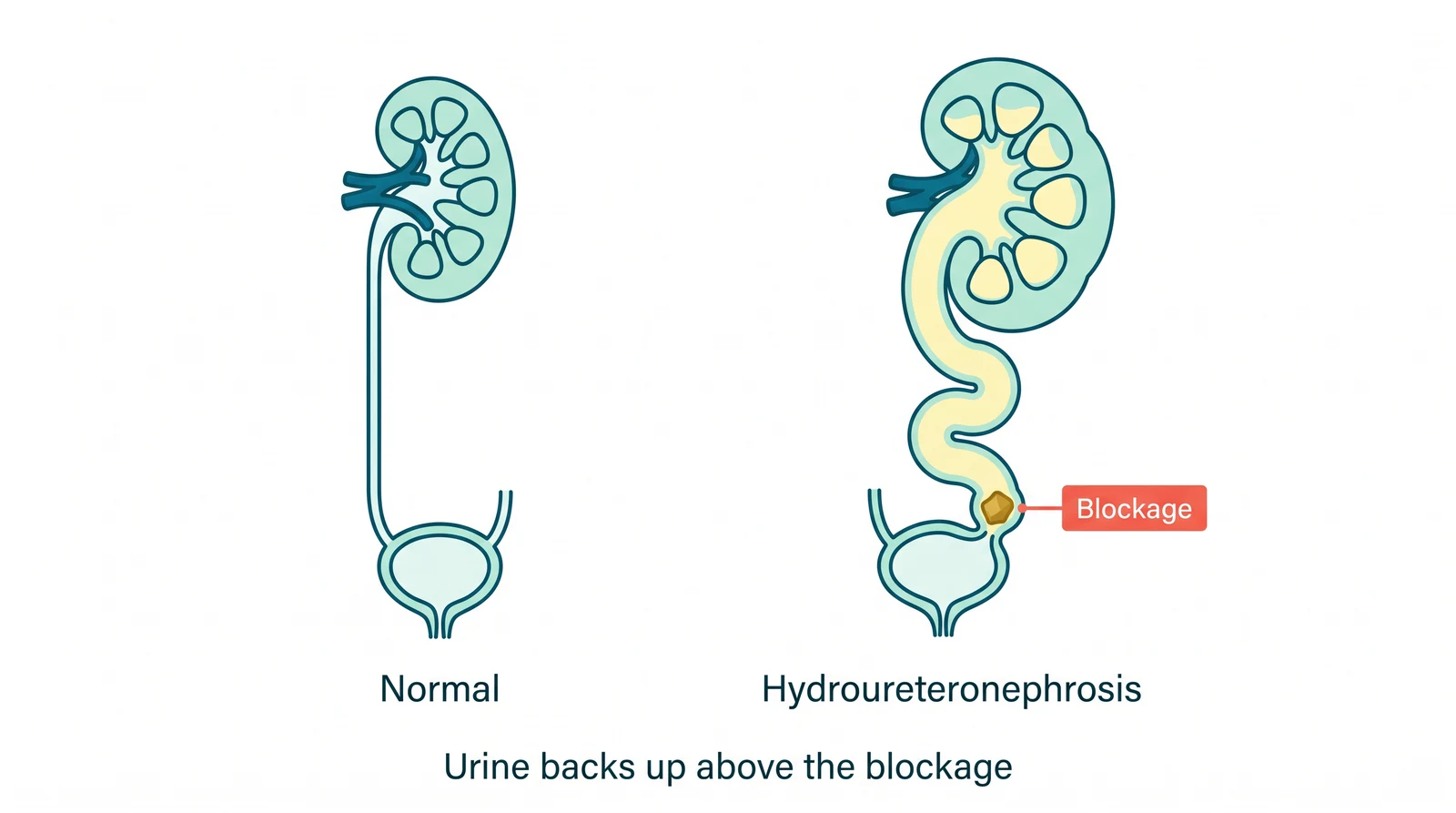
When the kidney and the whole ureter are swollen, the blockage is usually low down, near or inside the bladder. When only the kidney is swollen, it is often higher up, where the kidney joins the ureter. That clue alone narrows things down.
Why a kidney swells
In adults in Haryana, these are the causes we see most often.
A stone stuck in the ureter. This is the most common reason by far. The stone acts like a cork. Pain usually comes in waves, from the back towards the groin. Our guide to kidney stone size explains which stones pass and which need help.
An enlarged prostate. In older men, a large prostate can stop the bladder emptying. Pressure then builds all the way back up to both kidneys. Weak flow and getting up at night are common clues.
A narrowing. Scar tissue from an old stone, an infection or past surgery can narrow the ureter or the urethra.
A blockage present since birth. Some people have a tight join between the kidney and the ureter. It may cause no trouble for years and then show up on a routine scan.
Pregnancy. Mild swelling of the right kidney is common and usually harmless. The growing womb presses on the ureter, and it settles after delivery.
Less often, a growth in the bladder, ureter or pelvis can press on the tube. This is one reason the cause should always be found, not just the swelling noted.
Is a swollen kidney dangerous?
A swollen kidney is a warning sign, not an emergency in itself. How urgent it is depends on three things.
The first is infection. Urine that cannot drain can become infected. A blocked kidney with fever is a true emergency. It needs drainage the same day, because infection can spread into the blood.
The second is time. A kidney can cope with a blockage for a while, but if pressure stays high for weeks it slowly loses function. Some of that loss may not come back.
The third is whether one or both kidneys are affected. With one blocked kidney, the other usually keeps you well. With both, or with only one working kidney, the situation is more urgent.
Go to a hospital straight away if you have fever with shivering, severe pain that medicine does not touch, or you cannot pass urine at all.
The tests that find the cause
The ultrasound has already shown the swelling. The next tests find the reason and check how the kidneys are coping.
- Kidney function test. Shows how well the kidneys are filtering. The current price at our NABL-accredited laboratory is ₹500, as listed on our tests page.
- Urine routine. Looks for infection, blood and crystals. The current price is ₹150.
- Urine culture. If infection is suspected, it names the germ and the antibiotic that will work. The current price is ₹800.
- CT scan. Shows exactly where a stone or narrowing sits. It is the most useful single test for planning treatment.
- A kidney function scan. Sometimes needed to measure how much work each kidney is doing, especially if surgery is being considered.
Hydroureteronephrosis treatment depends on the cause
There is no tablet that shrinks a swollen kidney. Treatment removes the blockage, and the kidney then drains and settles.
First, drain the kidney if needed. If there is infection, severe pain or falling kidney function, the urologist relieves the pressure first. This is done with a thin tube called a stent, placed inside the ureter, or a small tube placed through the back. It buys time safely.
Then, treat the cause.
- A stone is removed, often by laser through the natural urinary passage. Our guide to laser surgery for kidney stones explains how.
- An enlarged prostate is treated with medicines or, if needed, surgery.
- A narrowing can be widened or repaired.
- A tight join present since birth can be corrected with a planned operation.
Some cases only need watching. Mild swelling in pregnancy, or a mild old swelling with normal kidney function and no symptoms, may simply be checked with a repeat scan. The NHS overview of hydronephrosis and the MedlinePlus page on hydronephrosis describe the same approach.
After treatment
Most kidneys recover well once the blockage is cleared, especially when it is caught early. A follow-up scan a few weeks later confirms the swelling has settled. If a stent was placed, it is removed in a short visit. Our article on how to sleep with a kidney stent covers the weeks in between.
Seeing Dr. Jatin Jain
Dr. Jatin Jain, MBBS, DNB (General Surgery), MCh (Urology) sees patients in the urology OPD every day, 9:00–11:30 AM and 4:00–6:30 PM.
Bring the ultrasound report and any earlier scans, even old ones. Comparing them shows whether the swelling is new or has been there for years, and that changes the advice. The blood and urine tests can be done in the same visit.
Questions patients ask us
Can hydronephrosis go away on its own?
Sometimes. If a small stone passes, or pregnancy ends, the swelling often settles without treatment. But it should be watched with a repeat scan, because a blockage that stays can slowly harm the kidney.
Is hydroureteronephrosis the same as kidney failure?
No. It means urine is backing up. The kidney may still be working well. A kidney function test shows how it is coping, and most people with a treated blockage keep normal function.
How long can a kidney stay blocked safely?
There is no fixed time, and it depends on infection and how complete the blockage is. A blocked kidney with fever needs drainage the same day. Without infection, doctors still aim to clear the blockage within days to a few weeks.
Will I need an operation?
Not always. Some stones pass, and some mild cases only need watching. When a procedure is needed, it is often done through the natural urinary passage without a cut. Your urologist will explain the options for your cause.
Book an appointment
If a scan has shown a swollen kidney, do not leave the report in a drawer. Book a consultation, and bring the report with you. The tests and the urologist are under one roof.
Book an appointment with the urology OPD, or call reception on +91 96676 67011.
Medically reviewed by Dr. Jatin Jain, MBBS, DNB (General Surgery), MCh (Urology), Saroj Hospital, Sonipat.
This article is general health information, not medical advice. For guidance about your own health, please consult a doctor.
Consult Dr. Jatin Jain
Book a real slot online — confirmation is instant.