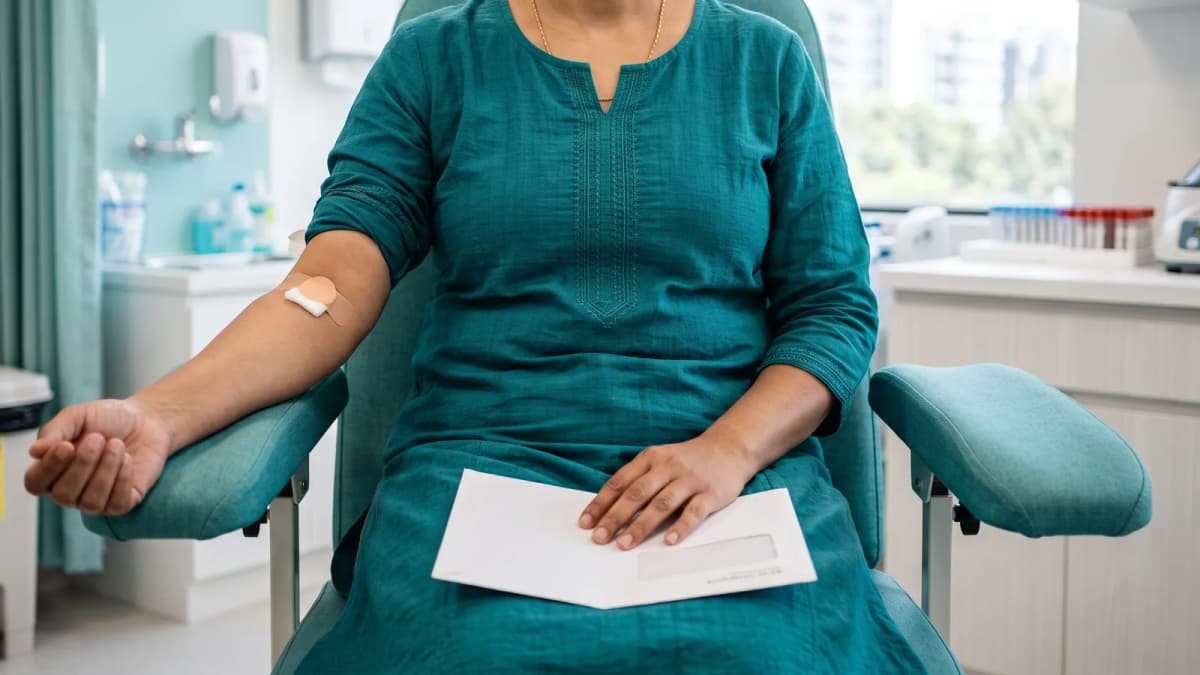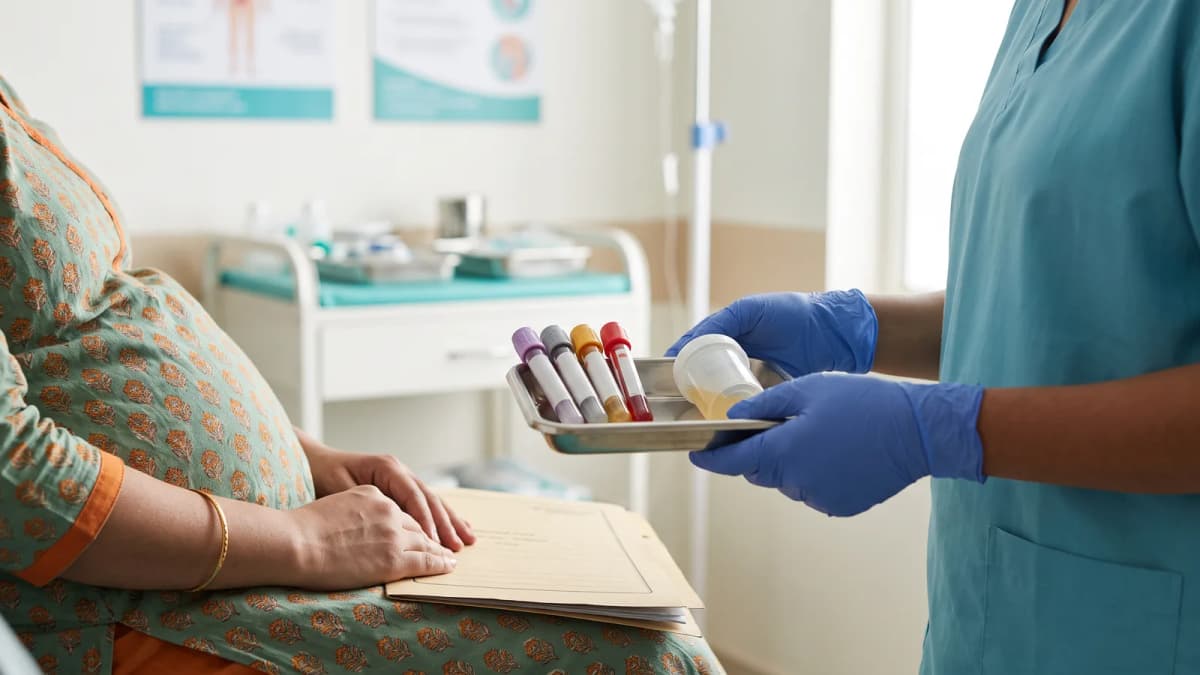
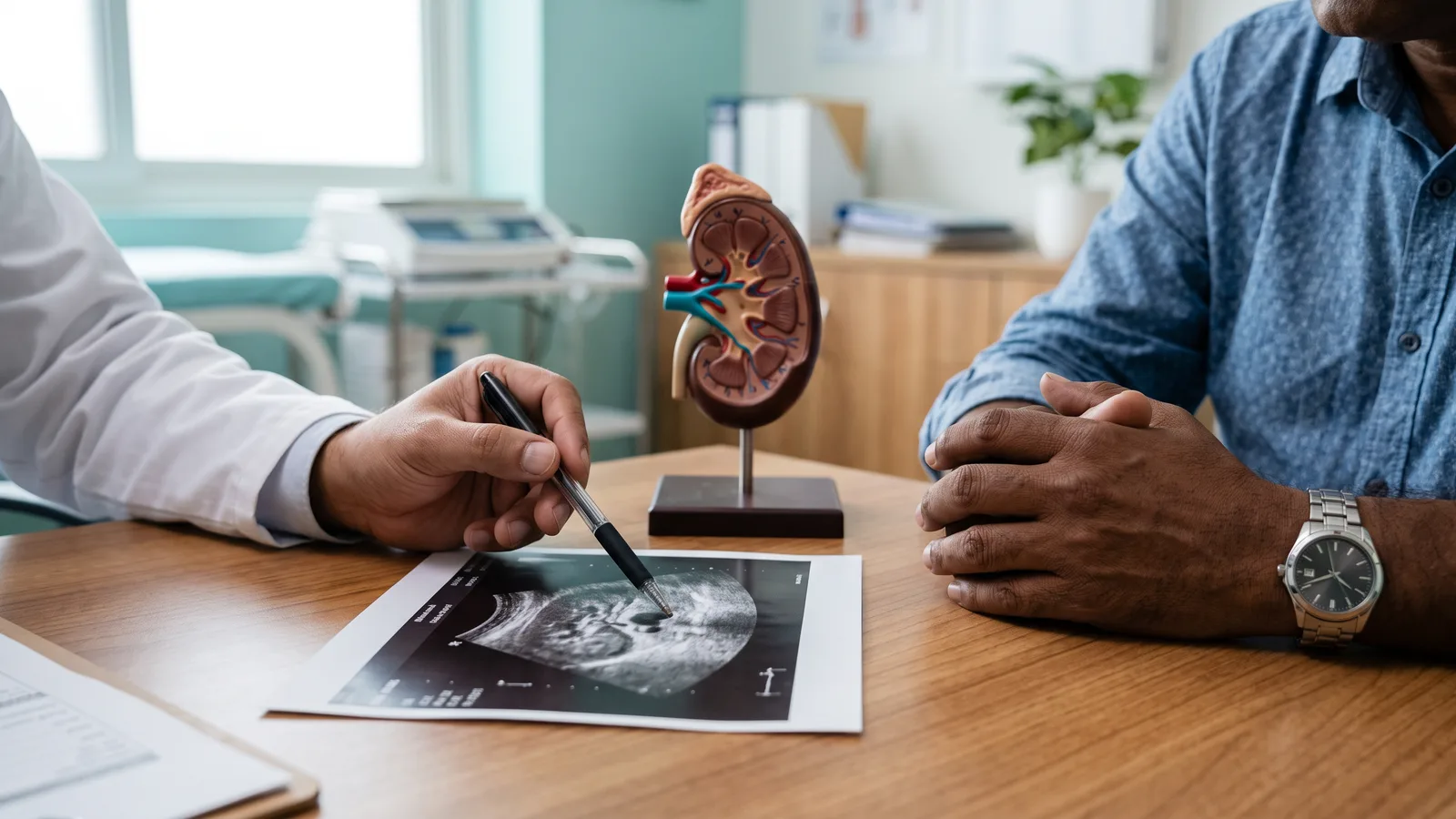
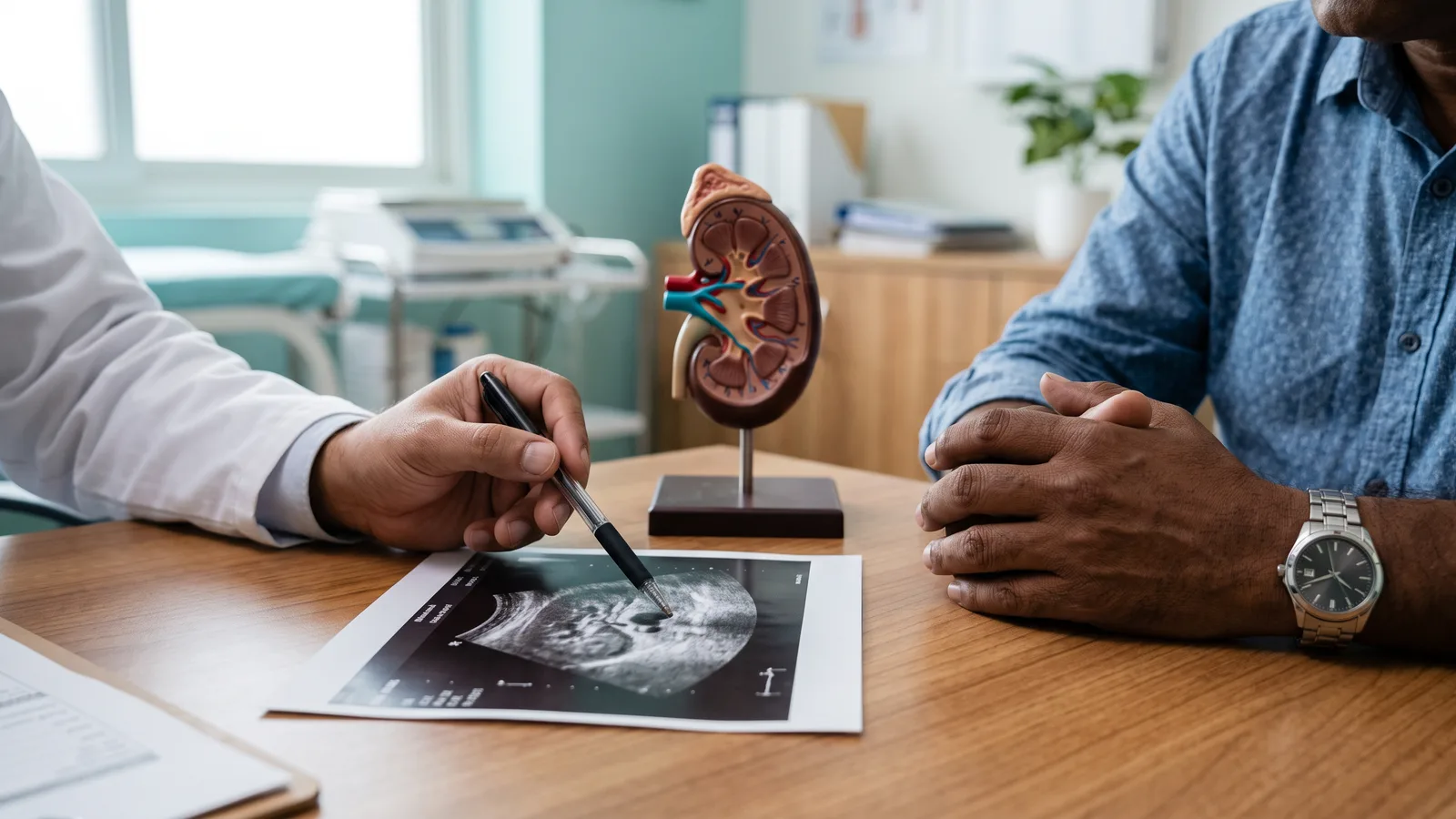
Many people find out about a kidney cyst by accident. They had an ultrasound for a stomach ache, or a routine check-up, and the report mentions "a 2 cm cyst in the left kidney". Nobody said anything about it, and now it is all they can think about.
Here is what most of them need to hear first. The large majority of kidney cysts are harmless. They do not turn into cancer, they do not damage the kidney, and they need no treatment at all.
This guide explains how to tell a harmless cyst from one that needs a closer look, and when treatment for kidney cysts is actually needed. Our urology department in Sonipat has ultrasound and the laboratory in the same building.
What a kidney cyst is
A cyst is a small, round pocket filled with fluid, a bit like a water balloon. In the kidney, cysts usually sit on the surface or just inside it.
They are very common, and more common with age. Many people over fifty have at least one. Most never know, because a simple cyst causes no symptoms.
The simple kidney cyst
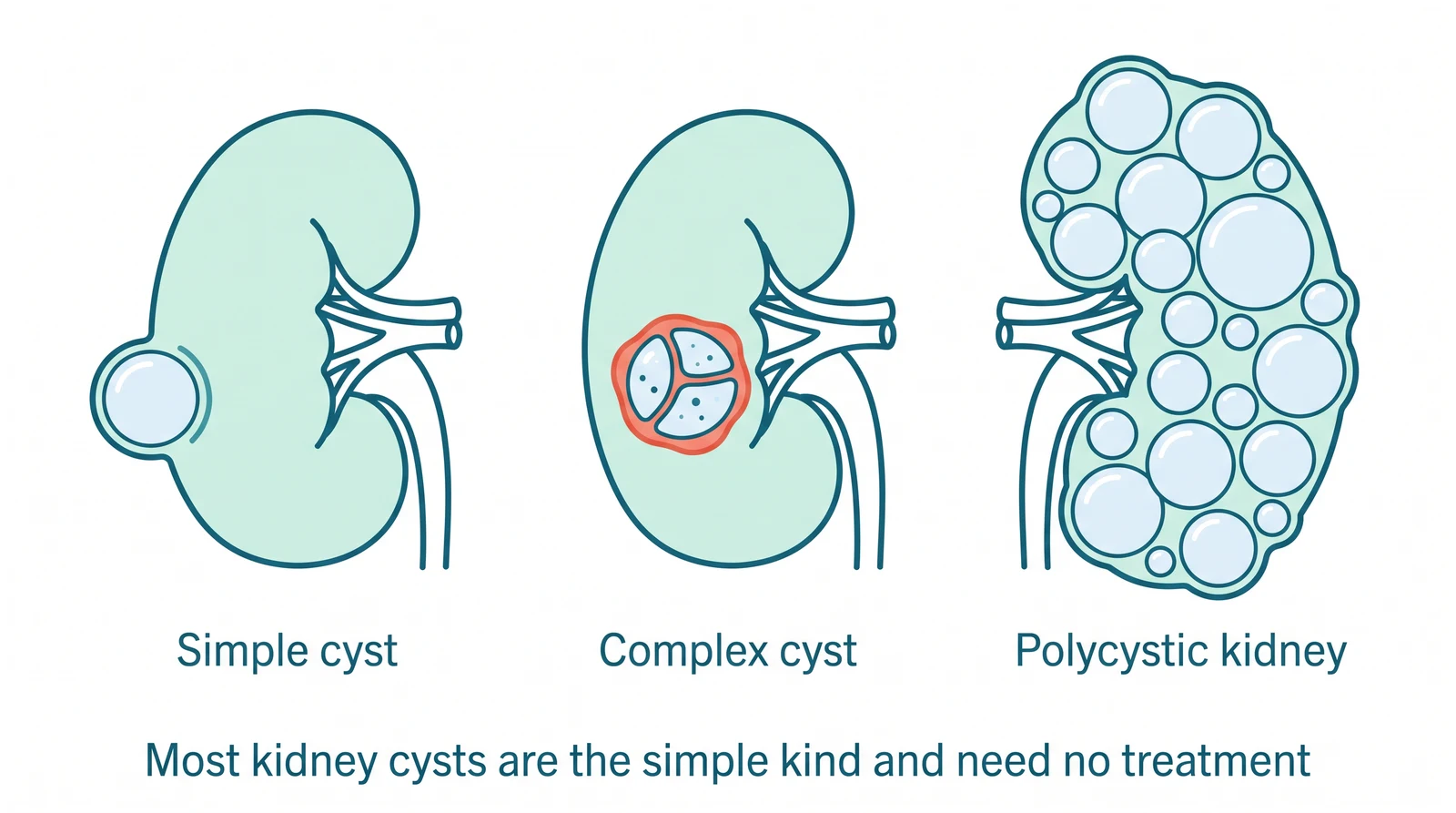
A simple kidney cyst has a thin, smooth wall and clear fluid inside, with nothing growing within it. On ultrasound it looks like a neat black circle.
These cysts:
- Do not turn into cancer
- Rarely grow large enough to matter
- Do not affect how well the kidney works
- Usually need no follow-up at all
If your report says "simple cyst", the usual advice is to do nothing. Your urologist may suggest a repeat scan in some cases, especially if the cyst is large or the scan was not clear.
The complex kidney cyst
A complex kidney cyst looks different. The wall may be thick or uneven. There may be dividing walls inside it, specks of calcium, or a solid-looking part.
Most complex cysts are still not cancer. But a few can be, so they are looked at more carefully. The next step is usually a CT scan or MRI with contrast. Doctors use a scoring system on these scans to decide how likely a cyst is to be harmless.
Depending on the result, your urologist will suggest one of three things. Some need nothing. Some need a repeat scan after a few months to check that nothing changes. A small number need removal.
Polycystic kidney disease is different
Sometimes the scan shows many cysts in both kidneys. This may be polycystic kidney disease, an inherited condition. It is a separate problem from a single simple cyst. It can slowly affect kidney function and blood pressure, and it often runs in families.
If this is suspected, you will need regular kidney function tests and care from a kidney specialist. Close relatives may be advised to have a scan too.
When treatment for kidney cysts is needed
A simple cyst is only treated if it causes a problem. That is uncommon. The usual reasons are:
- Pain in the side or back from a large cyst
- Infection inside the cyst, with fever and pain
- Blockage, when a cyst presses on the urine drainage system and makes the kidney swell. Our guide to hydroureteronephrosis treatment explains this.
- Bleeding into the cyst
- High blood pressure linked to the cyst, which is rare
The treatment options are:
Draining the cyst. A thin needle is passed through the skin under ultrasound or CT guidance, and the fluid is drawn out. A substance may be put in to stop it refilling. Simple drainage alone often lets the cyst fill again.
Keyhole surgery. Through small cuts, the surgeon removes the outer wall of the cyst so it can no longer fill up. This gives a more lasting result. Laparoscopic urology is part of Dr. Jatin Jain's surgical practice.
Removal. For the small number of complex cysts that may be cancer, part or all of the kidney may be removed. This is a planned decision, made after scans.
The NIDDK guide to simple kidney cysts and the MedlinePlus page on kidney cysts describe the same approach.
Living with a cyst you have been told to watch
Being told to "keep an eye on it" can feel worse than being told to have surgery. It helps to know what watching actually means.
It usually means one repeat scan after six months or a year. If the cyst looks the same, the gap gets longer, and often the follow-up stops altogether. You do not need to change your diet, stop exercise or avoid any activity. Nothing you eat makes a simple cyst grow.
Keep the reports together in one folder. Each new scan is compared with the old ones, and that comparison is what gives the answer.
The tests that help
- Ultrasound. Finds most cysts and shows whether they look simple.
- CT or MRI with contrast. Needed for complex cysts.
- Kidney function test. Checks the kidneys are working well. The current price at our NABL-accredited laboratory is ₹500, as listed on our tests page.
- Urine routine. Looks for blood or infection. The current price is ₹150.
If there is blood in your urine as well, mention it. Our guide to blood in urine explains why that always deserves a check.
Seeing Dr. Jatin Jain
Dr. Jatin Jain, MBBS, DNB (General Surgery), MCh (Urology) sees patients in the urology OPD every day, 9:00–11:30 AM and 4:00–6:30 PM.
Bring the scan report and, if you can, the scan images on a CD or phone. Older reports matter too. A cyst that has looked the same for five years tells its own reassuring story.
Questions patients ask
Can a simple kidney cyst turn into cancer?
No. A true simple cyst does not turn into cancer. Complex cysts are a different matter, which is why they are checked more carefully with CT or MRI.
What size of kidney cyst is dangerous?
Size alone does not make a cyst dangerous. A large simple cyst is still harmless unless it causes pain or blockage. What matters more is whether the cyst looks simple or complex on the scan.
Can kidney cysts go away on their own?
Sometimes small cysts shrink or disappear, but most stay the same size for years. Since a simple cyst causes no harm, this usually does not matter.
Do kidney cysts cause back pain?
Most do not. Large cysts can occasionally cause a dull ache in the side or back. If you have back pain, your doctor will also look for other common causes, such as a stone or a muscle strain.
Book an appointment
If a scan has shown a kidney cyst and you are not sure what it means, book a consultation. In most cases, a short visit ends the worry.
Book an appointment with the urology OPD, or call reception on +91 96676 67011.
Medically reviewed by Dr. Jatin Jain, MBBS, DNB (General Surgery), MCh (Urology), Saroj Hospital, Sonipat.
This article is general health information, not medical advice. For guidance about your own health, please consult a doctor.
Consult Dr. Jatin Jain
Book a real slot online — confirmation is instant.