Most men who hear the word "operation" for their prostate have already been on tablets for a while. Some are tired of getting up four times a night. Some have had a tube put in after they could not pass urine at all. A few have simply been told their kidneys are starting to suffer.
Enlarged prostate surgery is not the first step for anyone. But for the right man, at the right time, it can give back a full night's sleep and a strong stream that tablets never managed. This guide explains when surgery makes sense, how the common operation works, what recovery is like, and the side effects worth discussing before you decide.
Our urology department in Sonipat does the scans, tests and consultation in one building.
First, the usual enlarged prostate treatment
The prostate grows slowly in most men after fifty. When it squeezes the urine channel, men notice a weak stream, straining, dribbling and getting up at night.
For most men, enlarged prostate treatment starts with medicines. Some relax the muscle around the urine channel and work within days. Others slowly shrink the gland over months. Many men do well on these for years. Our guide to prostate treatment medicine covers them in detail.
Surgery comes in when medicines are not enough, or when the prostate starts causing harm.
When enlarged prostate surgery is advised
Your urologist may suggest an operation if:
- You cannot pass urine and needed a catheter, especially more than once.
- Tablets have not helped enough, or their side effects are hard to live with.
- You keep getting urine infections because the bladder never empties properly.
- Stones have formed in the bladder from urine that sits there.
- The prostate bleeds and you see blood in your urine again and again.
- The kidneys are being affected. Back pressure from the bladder can swell both kidneys. Our article on hydroureteronephrosis treatment explains this.
Some men also choose surgery simply because their symptoms spoil daily life, and they would rather not take tablets for decades. That is a reasonable choice to discuss.
How TURP works
The most common operation is TURP, short for transurethral resection of the prostate. It is one of the operations Dr. Jatin Jain performs.
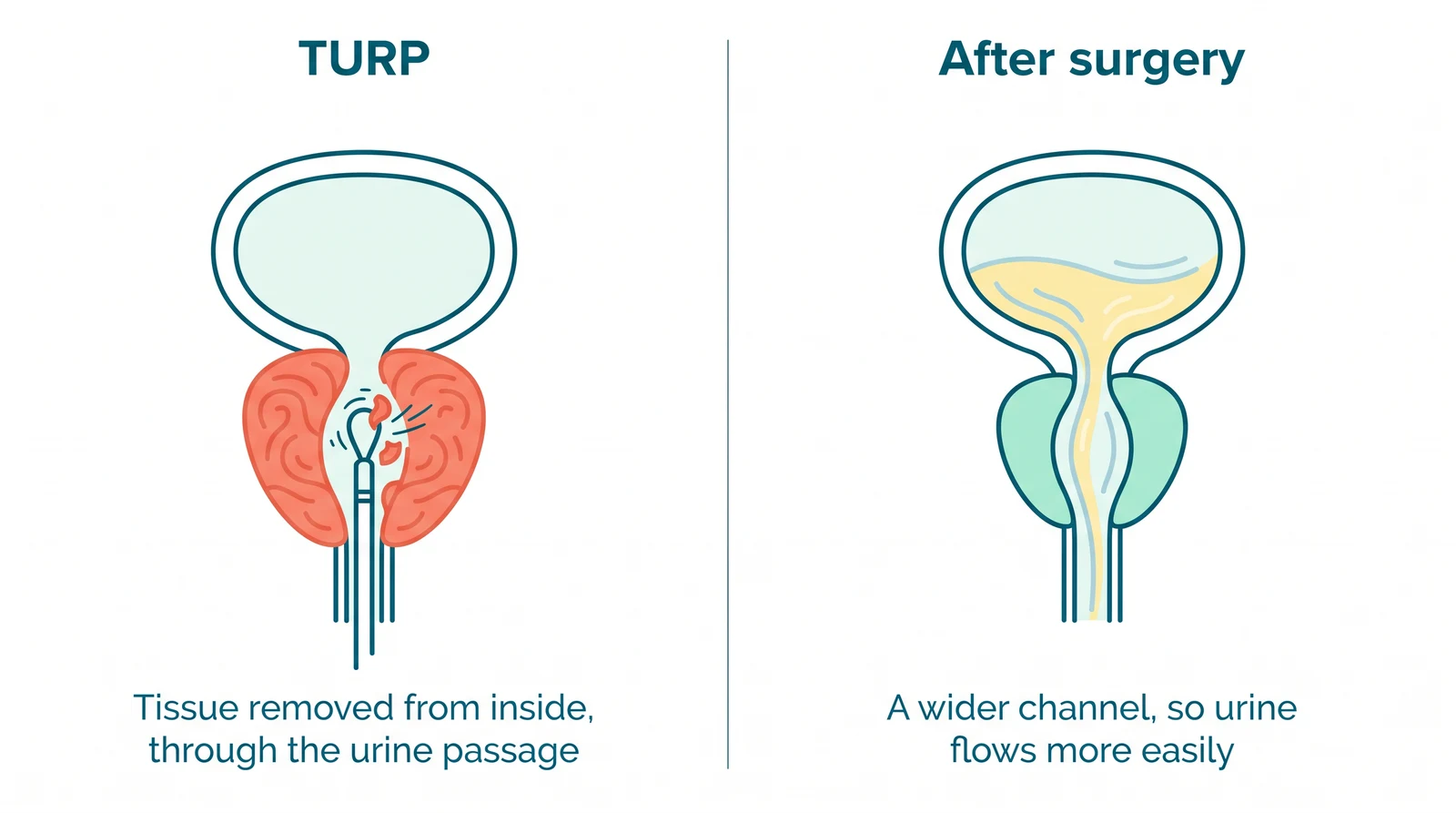
There is no cut on the skin. Under spinal or general anaesthesia, a thin telescope is passed up the urine passage. The surgeon uses a small electric loop at its tip to trim away the inner part of the prostate that is blocking the channel. The trimmed pieces are washed out and sent to the laboratory to be checked.
The outer part of the gland stays. Think of it like clearing an overgrown hedge from the inside of a tunnel, so the path through it becomes wide again.
The operation usually takes about an hour. A catheter is left in the bladder afterwards to drain urine and wash out any blood.
Other surgical options
Very large glands may need a different approach. Laser operations work on the same idea as TURP, using laser energy instead of an electric loop. Some newer procedures lift or shrink the prostate without removing tissue, and suit selected men with smaller glands.
The right choice depends on the size of your prostate, your general health, your medicines, and what matters most to you. Your urologist will explain which options fit and why.
Recovery after the operation
Recovery is usually steady rather than dramatic.
In hospital. Most men stay two or three days. The catheter is usually removed after one to three days, once the urine has cleared.
The first few weeks. It is normal to see some blood in the urine on and off, and to feel some burning or urgency. Drink plenty of water. A small amount of bleeding can return around ten to fourteen days, as scabs inside come away.
Getting back to normal. Light work and walking are fine within a week or two. Avoid heavy lifting, straining and long drives for about four to six weeks.
Most men notice a stronger stream quite quickly. Night-time trips usually improve over the following weeks, though not always completely, because the bladder itself may need time to recover.
Call the hospital the same day if you cannot pass urine, pass large clots, or develop a fever.
Side effects to discuss before you decide
Every operation has trade-offs. These are the ones men most want to know about.
Dry ejaculation. After TURP, most men find that semen goes back into the bladder instead of coming out. It is harmless and does not affect pleasure for most, but it does affect fertility. If you still want children, tell your urologist.
Erections. Most men notice no change. A small number find erections become weaker.
Leaking urine. Some urgency and minor leaks are common for a few weeks. Lasting leakage is uncommon.
Regrowth. The prostate can slowly grow again over many years. A small number of men need a second procedure later.
The NHS guide to TURP and the NIDDK guide to prostate enlargement describe the same benefits and risks.
Before the operation
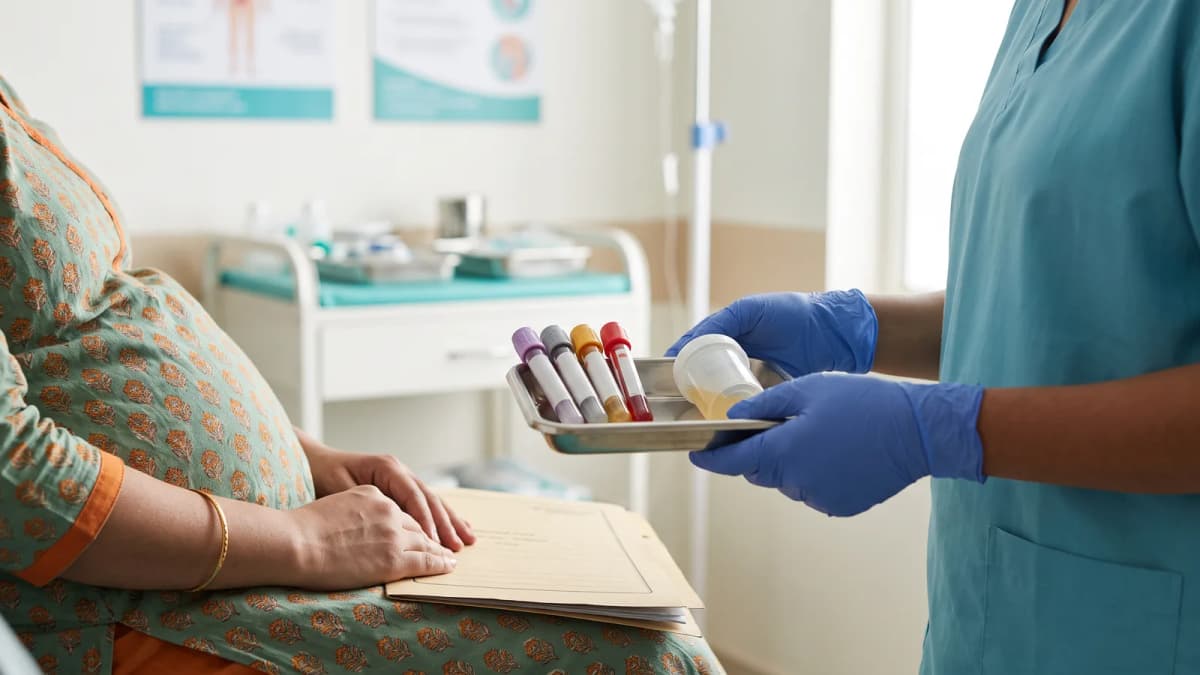
You will usually have a urine test, blood tests including kidney function, a PSA test, and an ultrasound to measure the prostate and see how well the bladder empties. The current price of a PSA test at our NABL-accredited laboratory is ₹600, as listed on our tests page.
Tell your urologist about every medicine you take, especially blood thinners. Some need stopping for a few days before surgery, but only on a doctor's advice.
Seeing Dr. Jatin Jain
Dr. Jatin Jain, MBBS, DNB (General Surgery), MCh (Urology) sees patients in the urology OPD every day, 9:00–11:30 AM and 4:00–6:30 PM.
Bring a list of the prostate tablets you have tried and for how long, plus any scans and PSA reports. If night-time urination is your main problem, our guide to increased urination at night is a useful read before the visit.
Questions men ask before surgery
Is TURP a major operation?
It is done under anaesthesia and needs a short hospital stay, but there is no cut on the skin. Most men are walking the next day and home within two or three days.
Will I need a catheter after prostate surgery?
Yes, usually for one to three days. It drains urine and washes out blood while the inside heals. It is removed before or soon after you go home.
Can the prostate grow back after TURP?
Over many years it can. Most men get long-lasting relief, but a small number need a second procedure later in life.
Is enlarged prostate surgery the same as prostate cancer surgery?
No. TURP removes only the inner part of the gland to open the channel. Surgery for cancer is a different, larger operation. The tissue removed in TURP is still checked in the laboratory.
Book an appointment
If tablets are no longer working, or you have needed a catheter, book a consultation to talk through your options. The tests and the urologist are under one roof.
Book an appointment with the urology OPD, or call reception on +91 96676 67011.
Medically reviewed by Dr. Jatin Jain, MBBS, DNB (General Surgery), MCh (Urology), Saroj Hospital, Sonipat.
This article is general health information, not medical advice. For guidance about your own health, please consult a doctor.
Consult Dr. Jatin Jain
Book a real slot online — confirmation is instant.